ChatGPT can translate text from one language to another. It often does it word for word and requires serious effort to yield satsifactory results. It doesn’t gather additional context, doesn’t follow best-practices and doesn’t ask you for additional information.
Localazy AI reasons about your localization needs before it translates anything.
How context is handled
When you send a button string “Book” to ChatGPT, you get back a translated word. It might be correct, it might be wrong, and it’ll vary between requests depending on how you phrased your prompt. You need to manually explain that this is a button, specify formality, pass your glossary terms, handle placeholder preservation, and hope the model remembers all that context.
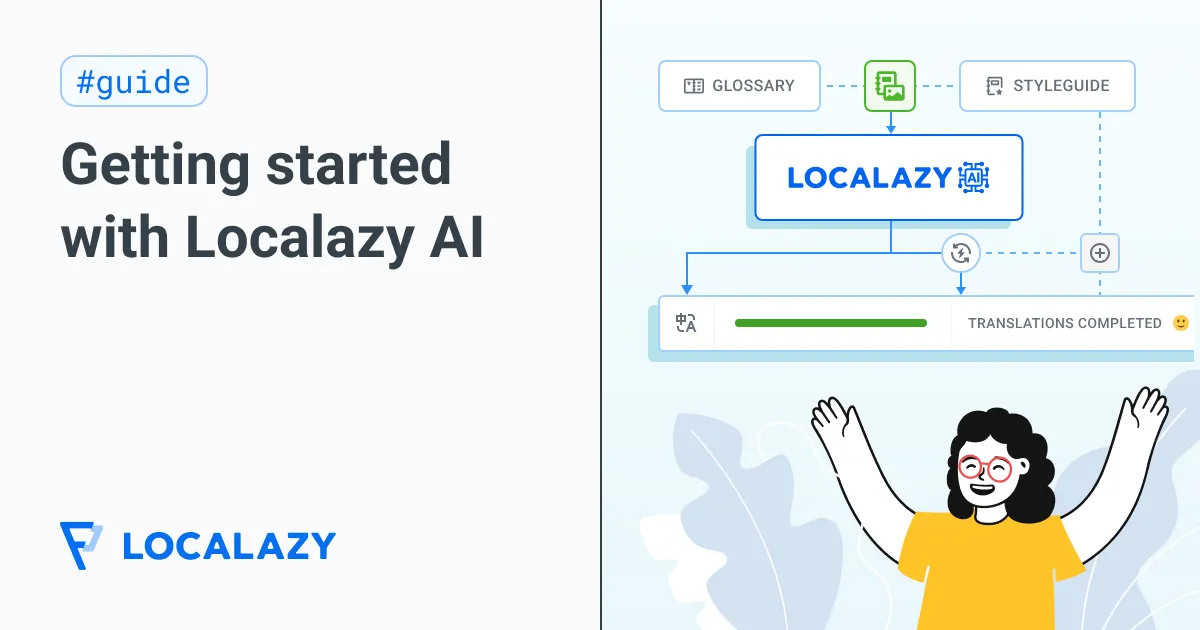
When Localazy AI sees “Book,” it collects context first. It checks the key name (reservation-button), reads your style guide (formal or informal?), looks at your glossary (is this the reading material or the booking action?), considers previous translations for consistency, and reads any notes you’ve added. Then it plans the translation approach and executes it. The word gets translated as a verb or noun based on actual context, not guesswork.
General purpose vs software translation-oriented
ChatGPT also doesn’t know about software localization patterns. It’ll happily modify your {userName} placeholder or break your formatting because it might be treating everything as general text.
Localazy AI understands these are functional elements that need preservation. It reasons about what they mean in the context of software and handles them correctly.
Build or buy?
The biggest difference is infrastructure. ChatGPT is a general-purpose text generator. You will have to build your own translation pipeline around it. Localazy AI is a localization reasoning system already built into a translation management platform.
They might use similar underlying models, but Localazy AI wraps them in context collection, processing logic, and software-aware translation planning. And it works directly inside the TMS you’re already using.
Cost tracking. With your own API keys, you’re paying per token. Your first test with 1,000 strings costs $2. But your actual app has 20,000 strings across 8 languages, so that’s $320 per full translation run. Next week you update 50 strings. Do you retranslate everything or just the changed ones? Suddenly, you need to build diffing logic, caching, and a database to track what’s been translated. Localazy tracks this automatically. You pay a predictable rate per word only for what actually gets translated, and the system knows what changed.
Context management. With ChatGPT, you need to explain that “Notification” in settings.json is a toggle label but in emails.json it’s a subject line. You add that context to your prompts, but now your prompts are huge and you’re paying for all that context on every API call. You spend hours refining prompts to pass the right context. Localazy AI collects context from your key names, glossaries, style guides, and translation notes automatically. You define it once, and the reasoning process uses it for every translation without you managing prompts.
Rate limits and errors. OpenAI has rate limits. You hit them during batch runs. Your script fails halfway through. You add retry logic, progress tracking, and resume logic. You’ve written 200 lines of error handling. Localazy AI handles this infrastructure layer. Rate limits do not apply. And progress tracking is built-in.
Quality control. With your own integration, you need to build validation to check if placeholders are preserved. You need native speakers to review translations, which means building a review workflow, marking strings for review, and tracking who reviewed what. You’re essentially building an in-house TMS from scratch. Localazy includes QA checks that validate placeholders, character limits, and formatting automatically. The review workflow exists, with permissions, commenting, and translation history all built in.
Edge cases. Plural forms work differently across languages. Variables appear in different positions. HTML tags need to stay intact. Some strings shouldn’t be translated at all. With ChatGPT, each edge case means updating your code or your prompts. With Localazy AI, these patterns are already handled by the reasoning system that understands software localization.
Prompt maintenance. You tweak prompts to handle brand voice, technical terms, and formality. But the perfect prompt for Spanish breaks your German translations. Now you need language-specific prompts that you’re version controlling, testing, and maintaining. Localazy AI uses style guides instead. You define tone and formality per language once. The system applies it consistently without you managing prompt variations.
The DIY approach seems simple until you actually build it. Then you’re maintaining infrastructure instead of shipping features. Localazy AI exists because all these problems are already solved.