Around 2013, I started building Floating Apps as a hobby project. This app lets you use tools like a calculator, e-mail, or notes in floated windows over other Android components. Users liked it and offered to help translating it. Making the app available in more languages helped it reach millions of downloads.
However, offering 30+ languages meant that I had to maintain them too. Every new feature brought in more translation work. I tried different platforms and developed tools to work around limitations. Keeping it all updated was taking quite a bit of time... Time taken away that I could use to improve the app.
It got to the point where I considered using icons just to avoid adding more text translations. The overhead work had become too much. That frustration was the fuel that made me build Localazy.
📲 Going multilingual made my app profitable 🔗
Before Localazy, I ran a 10-person software studio where I worked on different projects for customers. There were good ideas, but also deadlines and budget limitations, as well as decisions that made it difficult to execute those ideas well. I wanted to build something where I could make the decisions.
For the first few years, I developed Floating Apps while working on other things. After I stopped running my previous company’s operations in 2016, I started taking it more seriously.
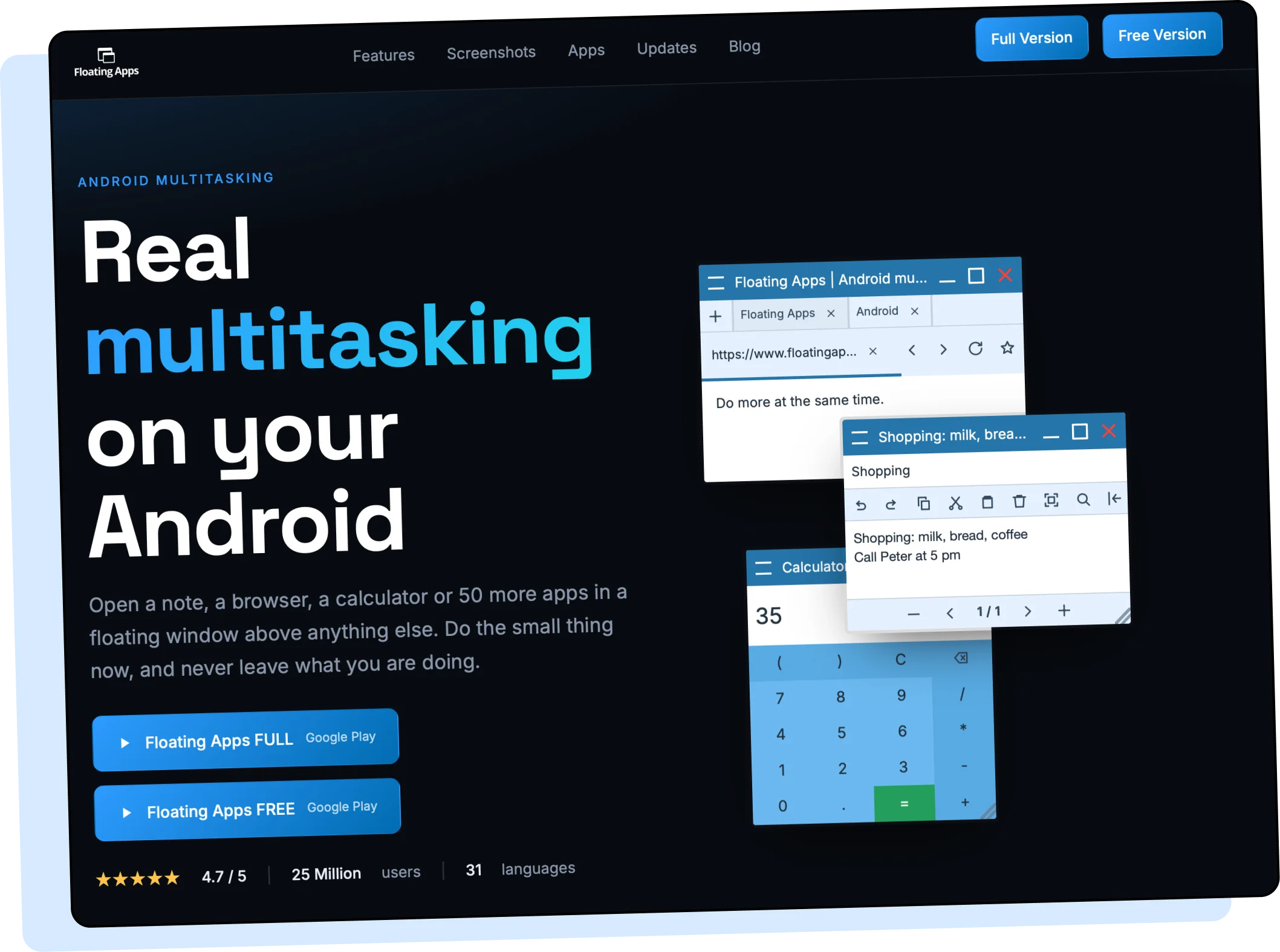
The app was initially in English. Then people started contacting me with an offer. They liked it and wanted to use it in their own language. They were also willing to help with the translation. So I sent them a file. They then translated it and sent it back. That system worked fine while there were only a few people and languages involved. Localization worked, but managing it was painful.
As more languages became available, I could see the difference in downloads. I started looking at Google Play statistics and others to figure out which markets might be worth exploring. The app was earning money. I wanted to invest some of that money into reaching more people.
Japan became the second-largest market for the paid version, and South Korea was another successful market. Some other countries such as Indonesia, India, and Vietnam brought in millions of downloads of the free app. Of course, localization wasn’t the only thing I did. I also invested in promotion and spent time listening to users. But making the app available in their languages was a key part of its growth.
Sending files back and forth worked, but managing translations was difficult. I needed the content to move along with development, no limits for contributors and an interface that wasn't painful to use
Eventually, I was maintaining about 30-35 languages. Creating a new feature could mean making changes in all of those languages.
I needed a space where the community could contribute without sending files back and forth. I needed to know what people had changed. I also needed translations to move along with development.
I tried several platforms. Each one resolved some problems, but no platform combined everything I needed. For example:
- Most platforms had a limit on contributors. This doesn’t work very well when you invite your community to help. You just don’t know who will participate, how much they’ll translate, or even if they’ll return. I wanted to let people join. It had to be easy for them to contribute.
- Interfaces were too complex or slow. Some contributors worked purely from their phones. They would email me because they wanted to translate, but the UI was making it difficult.
- Quality translations were hard to identify. Review processes were unreliable and access to professional translations was a whole other beast.
- Releases had to be postponed until they were completely translated. I needed a continuous localization approach so my users could keep improving the existing translations while I reviewed the changes at any point in time.
Experiences like these formed what I wanted Localazy to become.
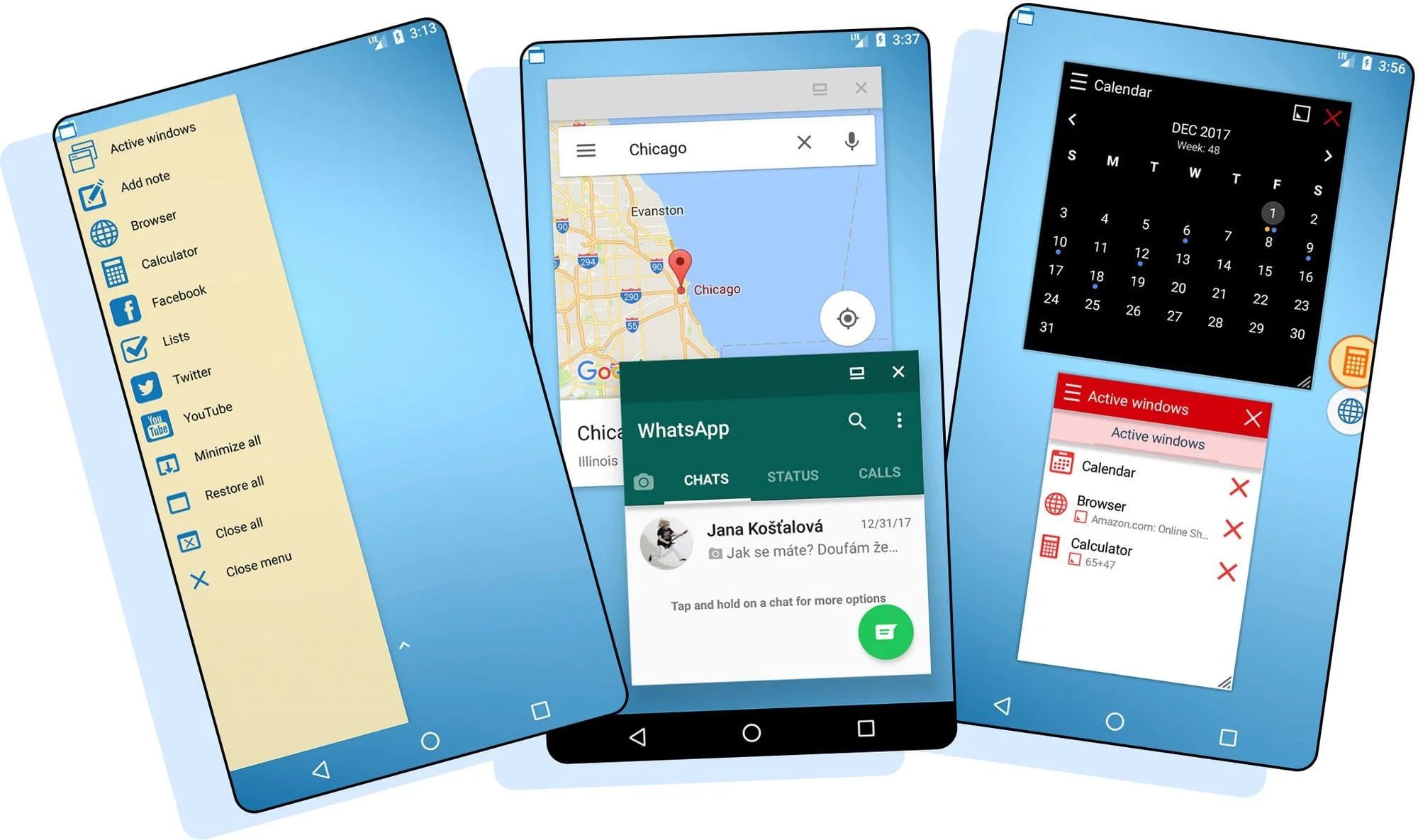
🥲 But my workarounds created more work 🔗
Having people willing to help was wonderful. But there was a problem: I couldn’t assume every contribution was good. Some translations were poor. Others were deliberately damaged. I could spend time developing the app, come back to the translation platform, and find changes that weren’t supposed to be there.
I wrote tools that downloaded translations through an API. They stored the translations on my computer and compared them with a later version. I then went through the differences manually.
That’s why Localazy’s review process matters so much to me now. I wanted contributions waiting for review to be easy to find. I also didn’t want to build a parallel system to be able to do this.
Professional translation solved a different issue. Our Japanese translation was bad enough that users complained, so I thought I’d have professionals handle a group of important languages. The quality was good, but when I needed more text translated, I had to create another order and pay for it separately. That’s another recurring job I didn't want to overcomplicate.
All of this led us to create the human translation services. Customers choose the languages that need professional attention, and the work continues as new text arrives, with OTA updates available for instant deployment.

🧰 My autonomous localization kit 🔗
With my original setup, I’d spend two or three months developing features. Then, I’d upload the new text when a version was almost ready and start the translation process.
Pros needed time, while community contributors worked at their own pace. I had to check the results. Releases could be delayed by two or three weeks. If I released an incomplete translation, it could remain incomplete until the next app update. I dreamt of new strings reaching translators automatically, so that a lot of the translation would already be done when I was ready to release.
I didn't want to add another task like uploading and downloading translations to my list. Over-the-air updates and integration with dev tools solved this problem
That’s why integration with developer tools was so crucial from the beginning. I shouldn't have to think about yet another task like uploading and downloading files. I wanted development and localization processes to run in parallel, as they do for many of our clients today. Over-the-air translation updates resolved the other problem, which was waiting for the next version. Translations could reach the app after a release.
Combined, these things were my idea of an autonomous localization kit. I wanted to keep developing, with localization taking place in the background.
💙 The decision to build Localazy 🔗
Around Christmas 2018, I was thinking: What do I do next? Floating Apps had become successful, but I tragically lost access to the Google advertising revenue because of an issue involving how the floating windows worked. And... advertising produced most of the app’s income. Losing that changed the reality of developing it for a living.
Meanwhile, I had accumulated years of experience with localization problems. I didn’t know exactly how the company Localazy would turn out, but I did have a pretty clear idea of how a tool should work to solve the problems I knew. So I started writing the code.
I quickly realized that it was way too much work for just one person. I brought in others, and we spent 2019 building the first version while we worked on other projects. I financed that year myself. My colleagues Dan, Ondra, and Jan were all part of the early team that helped Localazy get off the ground.
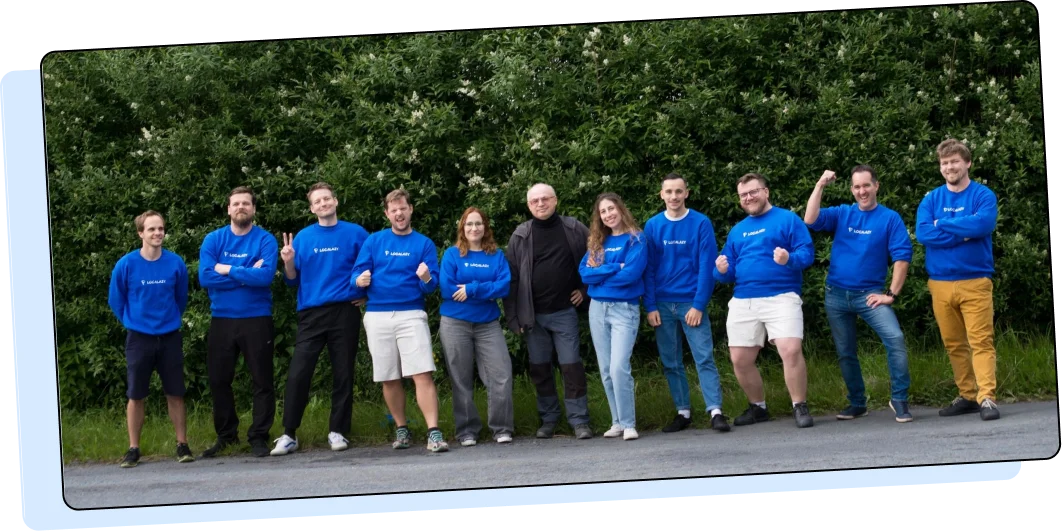
Eventually, of course, we needed more funding. I attended an event to learn how companies presented themselves to investors. A conversation after that eventually led to our first investment. We established Localazy as a separate company in March 2020. We received the first investment in April. Around that time, we made our product publicly available.
👀 Other devs recognized the problem 🔗
The first public version of Localazy was built specifically for Android developers, connecting an Android project to the localization process. It helped move new text to translators, and brought the finished translations back into the app.
Floating Apps was the first real test. I could use the platform to solve the same problems that led me to build it. When Android developers started to use Localazy, many of them said they were struggling with those same problems. Specifically, they wanted to automate repetitive work, stay on top of contributions, protect translation quality, and ensure localization didn’t delay their releases.
Then, they began asking if Localazy could handle the rest of their products. Some of these people had an iOS app along with their Android app. Others needed translated website content or something stored in different file formats.
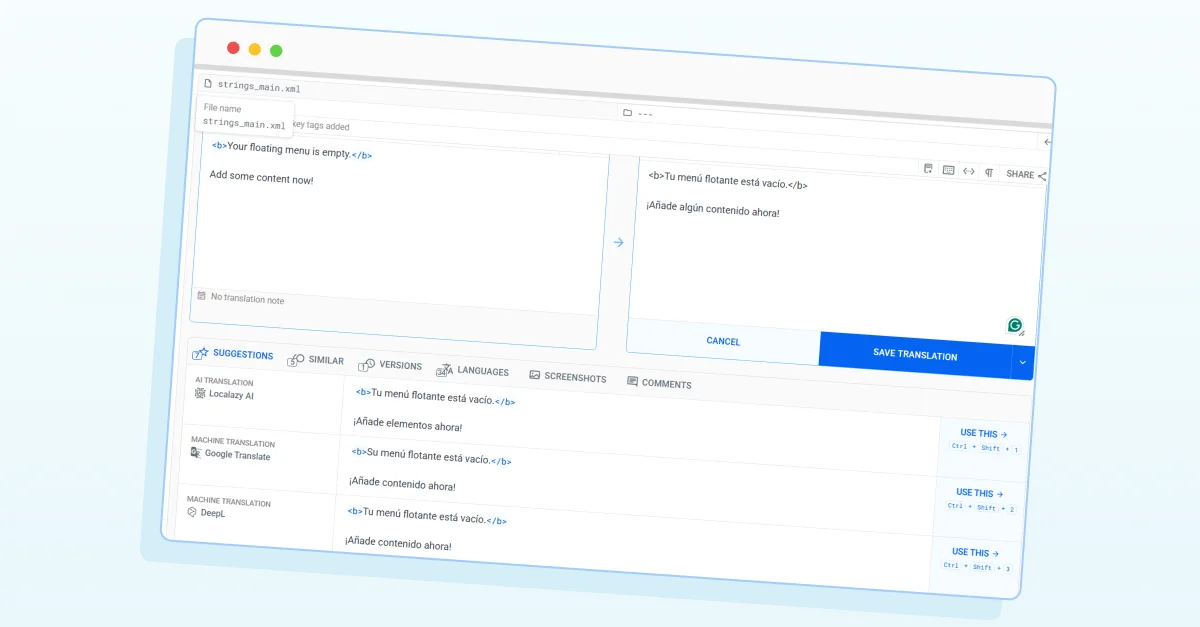
With the investment we got, we could work on Localazy full time, going beyond its original Android focus. In September 2020, we released the Localazy CLI. It had support for more formats, so it became useful for a wide range of software projects.
We were now supporting more types of software, but developers were asking us to resolve the same problems I had with Floating Apps. They wanted an easier way to send content for translation, work with contributors, check the results, and release updates without waiting for every translation to be finished. Releases, Format Conversions, CDN, Duplicity Linking, Branching, dozens of integrations, and other useful features came shortly after to make their life easier.
🪄 I still use what we built 🔗
Even though I’m CEO now, I still code. Floating Apps also remains on Localazy. It has been localized there since 2020, with a total of 35 languages available.
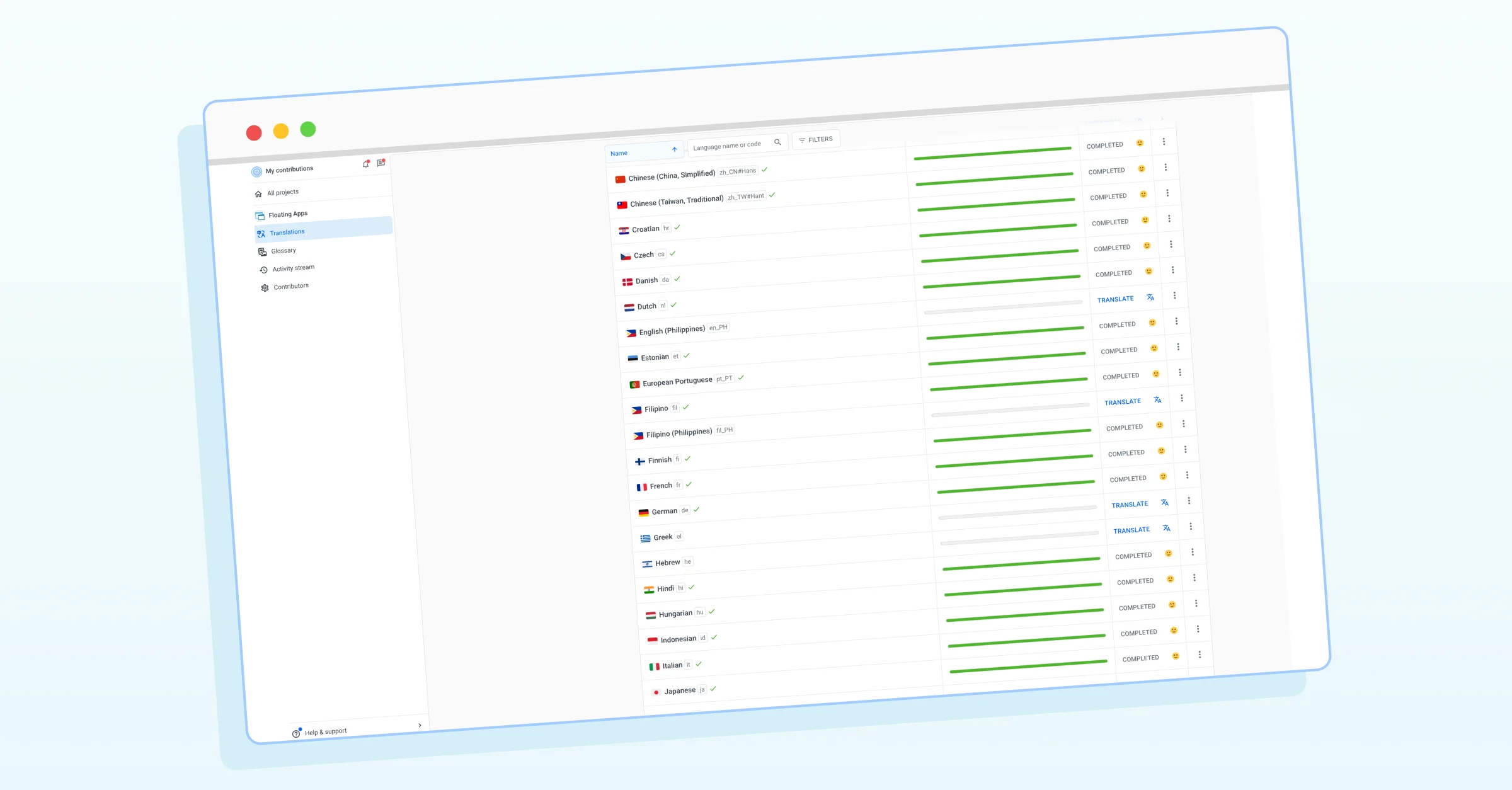
Of course, I’m now focused on developing Localazy and only make occasional updates to my original app, but people still use it and its translations go through our platform. Localazy has developed massively, with context features, automations, and our own AI to translate content. I don’t need the collection of comparison tools and manual steps I once used to keep everything under control. As I work at Localazy, those experiences stay with me.
I now know exactly how a customer feels when they struggle to review changes or wait for translations before releasing a feature. I’ve been the guy trying to finish the product while also managing the files, orders, contributors, and all the checks.
Overall, I wanted a system I could trust to take care of that stuff. I built it. Building it gave me back time to focus on my product. I no longer had to stress about translations, their quality, and distribution or updates.
That’s what I want Localazy to do for our customers too.