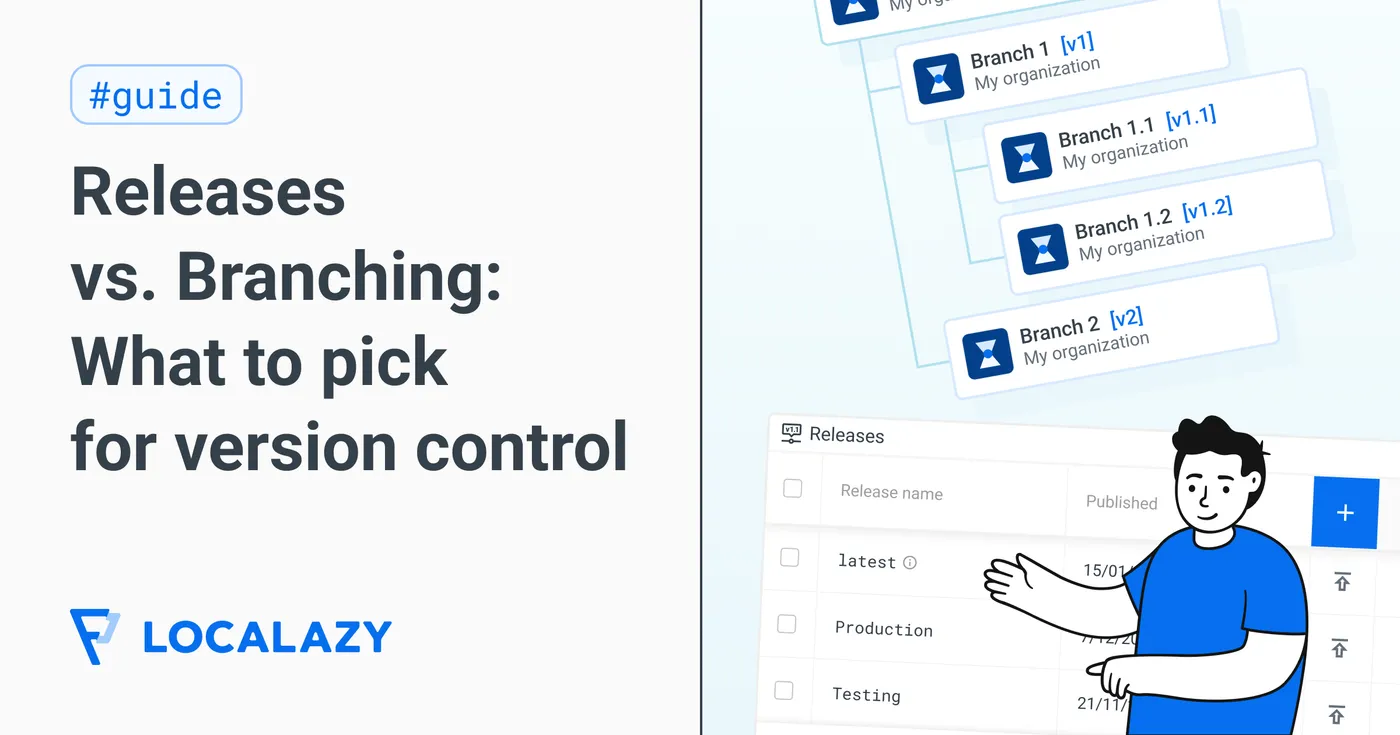
Branching
A workflow structure that applies branching principles to translation projects.
Branching in localization refers to creating separate versions of a translation project that can be worked on independently and later merged back together. Similar to how software developers use branches in version control systems like Git to work on different features simultaneously, localization teams use branches to manage translations for multiple product versions, white-label or market-specific variants, or experimental features without affecting the main production translations.
When you create a branch, it typically copies the parent project’s content (including glossaries, screenshots, and translation memory), creating an independent workspace. Translators can update strings, change context information, and test translations without affecting the main branch. Once development merges the feature into production, the translation branch can be merged back, combining the new translations with the main project. Most localization platforms offer conflict resolution tools to handle cases where the same string was modified in both branches.
🌿 Common use cases for branching:
- Translating new features before they reach production to avoid deployment delays
- Managing multiple release versions simultaneously (supporting v1.0 while developing v2.0)
- Creating and testing white-labeled translations for different customers or markets
- Experimenting with alternative translations without affecting live content
- Coordinating translations across development, staging, and production environments
Localazy’s branching feature allows teams to maintain and merge multiple project branches through both the web interface and CLI. When creating a new branch, you can choose between a full copy (including all content and translations) or an empty branch (just the structure without content). Each branch includes its own copy of glossaries, screenshots, and contributor roles, functioning as a standalone project that can be merged back when ready.
The platform offers both automatic and manual conflict resolution strategies when merging branches. You can analyze potential conflicts before merging using the CLI, and configure which languages, files, or keys to include in the merge. Localazy also supports automated merging through the Automations feature, allowing you to set up workflows that automatically merge updates from one branch to another for selected languages. This pairs well with CI/CD pipelines, where branches sync with Git repositories and translation updates trigger automatically when code is merged.