If you're reading this, chances are you're either considering or scheduled for expansion in the Korean market this year. Whether you feel confident or unsure about ticking all the checkboxes, don’t worry: this article will serve as a guide to help you prepare, no matter what stage you are at in your Korean localization journey.
Following my previous article on general Korean localization rules, this piece focuses specifically on the complexity of UX and software localization. I'm gonna introduce you to four points you'd want to check in your UX localization journey with some concrete examples, coming from your local guide (me, haha).
But before diving into the details, let's first understand the core cultural context that drives this digital behavior: 빨리 빨리 (Pali-pali).
⚡ Korea’s "hustle and bustle" culture, aka 빨리 빨리 (Pali-pali)
Approximately half of Korea's population resides in Su-do-gwon (the Seoul, Incheon, and Gyeonggi area), as shown in the chart below:
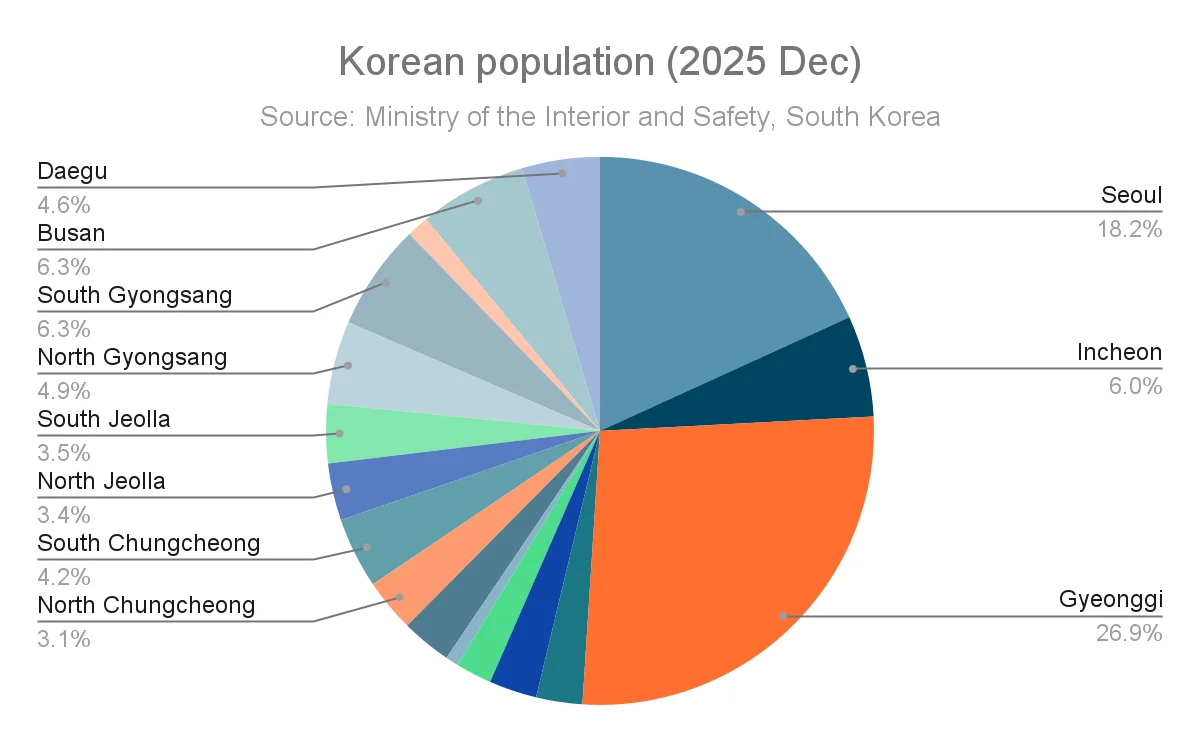
And this unique density creates a “hustle and bustle” culture, also known as Pali-pali ("quickly, hurry, hurry").
Now, you might ask yourself what drives this unique concentration of population. The answer is quite simple: the capital area offers the bulk of high-paying jobs. In fact, housing prices in non-capital regions dropped for 55 consecutive weeks in 2025, while the complete opposite happened for Seoul and its surroundings. Since everyone is gathered around the same area, there are always lots of people wherever you go. During rush hour in particular, you need to fight your way through the crowd, unless you are working fully remote and don't need to commute. There's even a word for it: 지옥철 (ji-ok-chul, or hellish subway).

The fast-paced nature of Korean culture means one thing for your product: clear CTAs, concise copy, and a seamless user flow are non-negotiable for Korean users. It's also worth noting that Korean applications often integrate multiple features, as users prefer a one-stop solution. While maintaining your core business focus is vital, expanding beyond a single function will set you apart from those that don’t.
With this context in mind, let’s dive in.
📖 Point 1: Get your style guide ready
For those familiar with the localization process, you may already know that style guides and glossaries are very important. These are even more essential for Korean localization because it creates a foundation for consistent tone.
But what specific points should you consider for Korean style guides and glossaries?
When building your glossary, there are three decisions you need to make for every term:
- 1️⃣ Does it get translated into Korean?
- 2️⃣ Does it get transliterated? (e.g: ice cream → 아이스크림, agile → 애자일)
- 3️⃣ Does it stay in English? (e.g: CTAs)
Then comes the harder question: what do you do with your brand-related terms? Translate, transliterate, or keep them in English? There is no right or wrong answer there. Any of the three can work. You just need to stick with the approach you pick.
But at least for the first three, there is a simple way to confirm whether you are right or wrong: by using Google or Naver.
A note about Naver
If you are not familiar with Naver, think of it as Korea's internet in one place: search, blogs, shopping, and fintech (Naver Pay) all in one platform. If you are serious about winning users in the Korean market, you need to understand how it works.
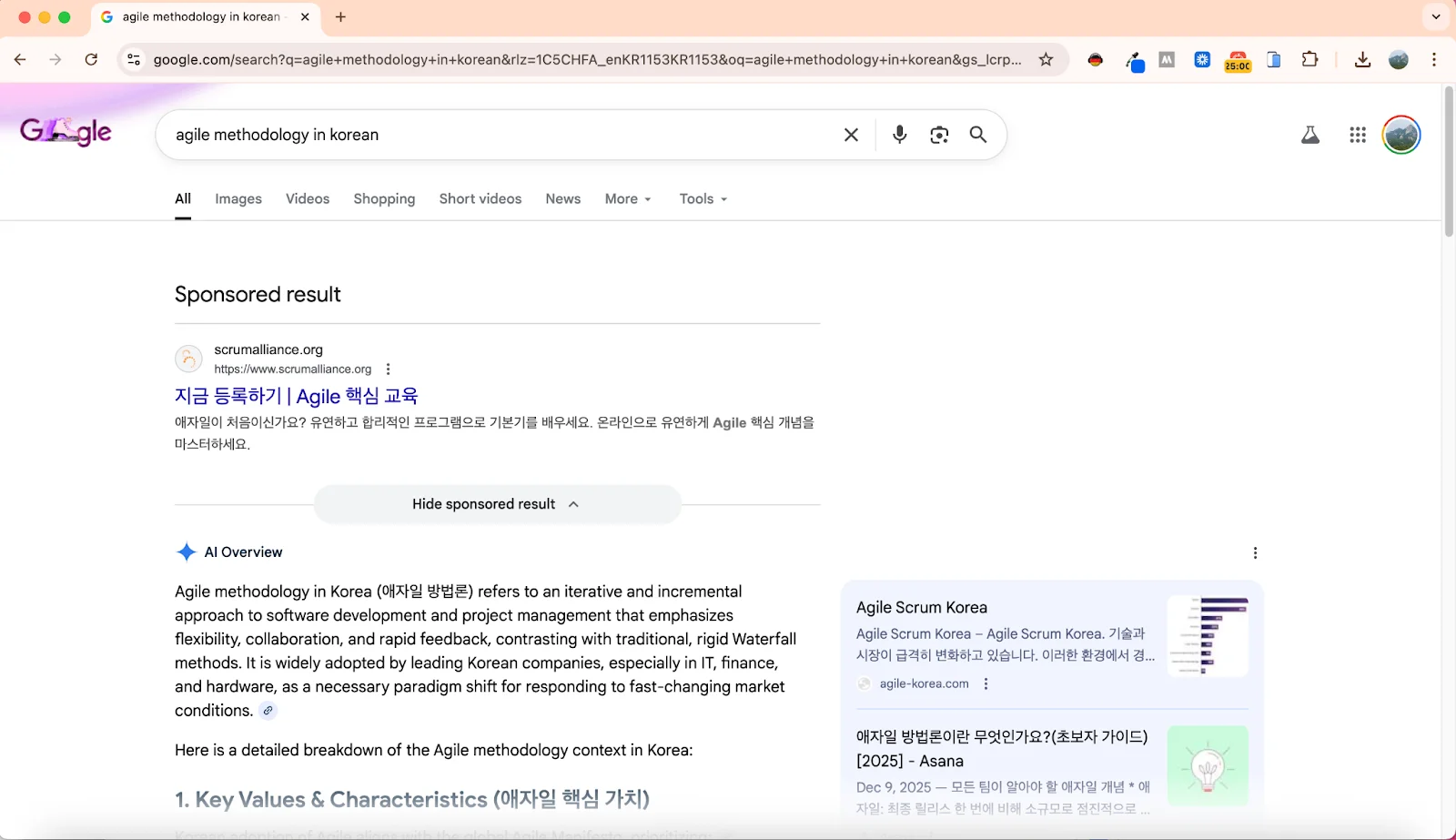
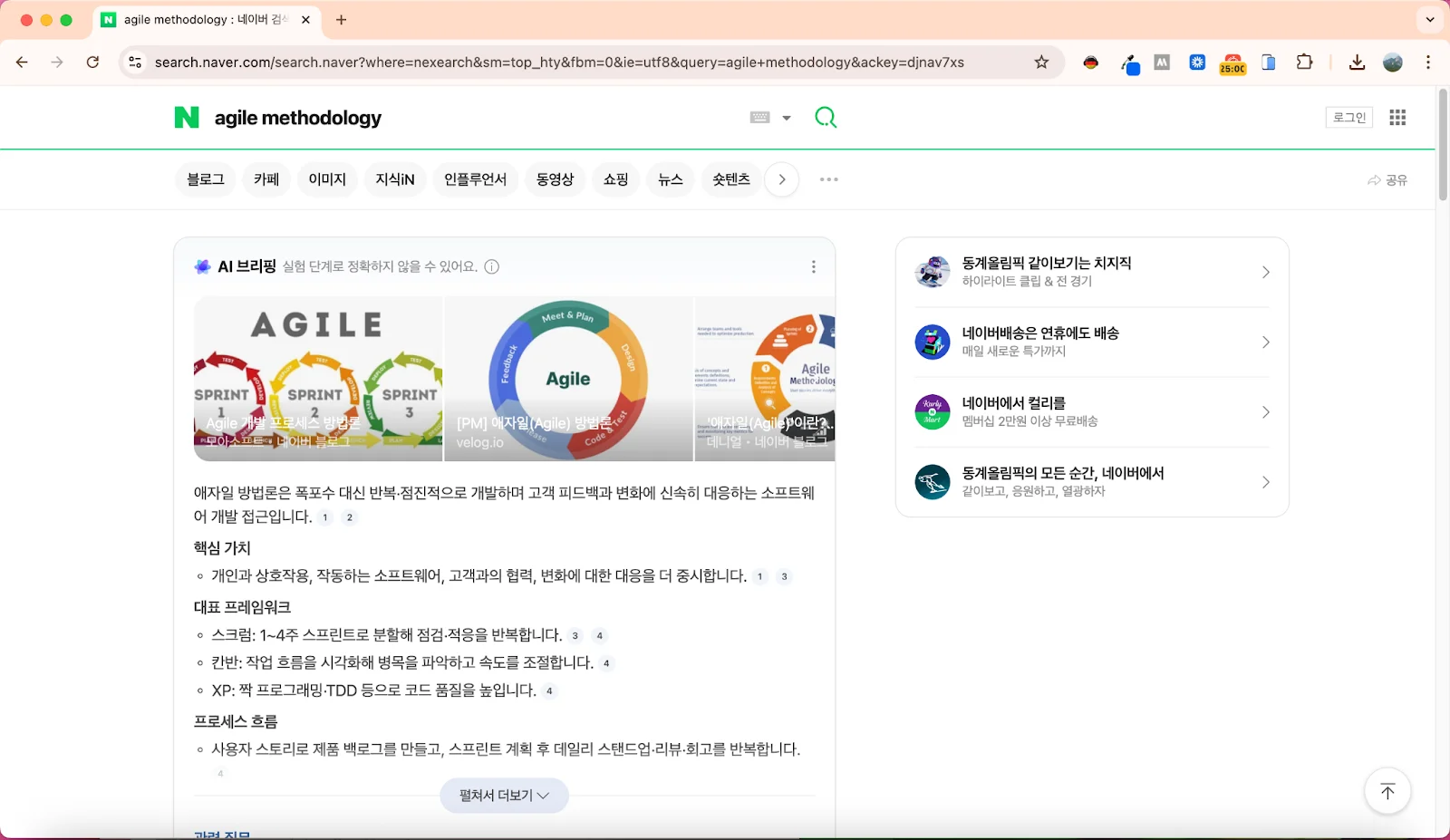
An example: let’s say you want to know how "agile methodology" is written in Korean. Simply type the term into a search engine like Google or Naver. For Google, add "in Korean." at the end. For Naver, you can simply type the English word. Your results will then look similar to the example shown below, and this will help you make a decision.
As you work on a glossary, you also cannot forget to work on a good style guide, since Korean is a language deeply rooted in context.
But what are the essential elements of an effective Korean language style guide?
- 🎯 Purpose of the app and intended user persona
- 🔵 How to handle bullet points
- 📅 Date, time, and numbers
- 🔄 Transcreation rules
- 📐 Measurement units
- 🙇 Level of honorifics
- ✍️ Punctuation rules
- 🎨 Tone and manner
- ✨ Brand voice
- 🗣️ Dialect
- 👆 CTAs
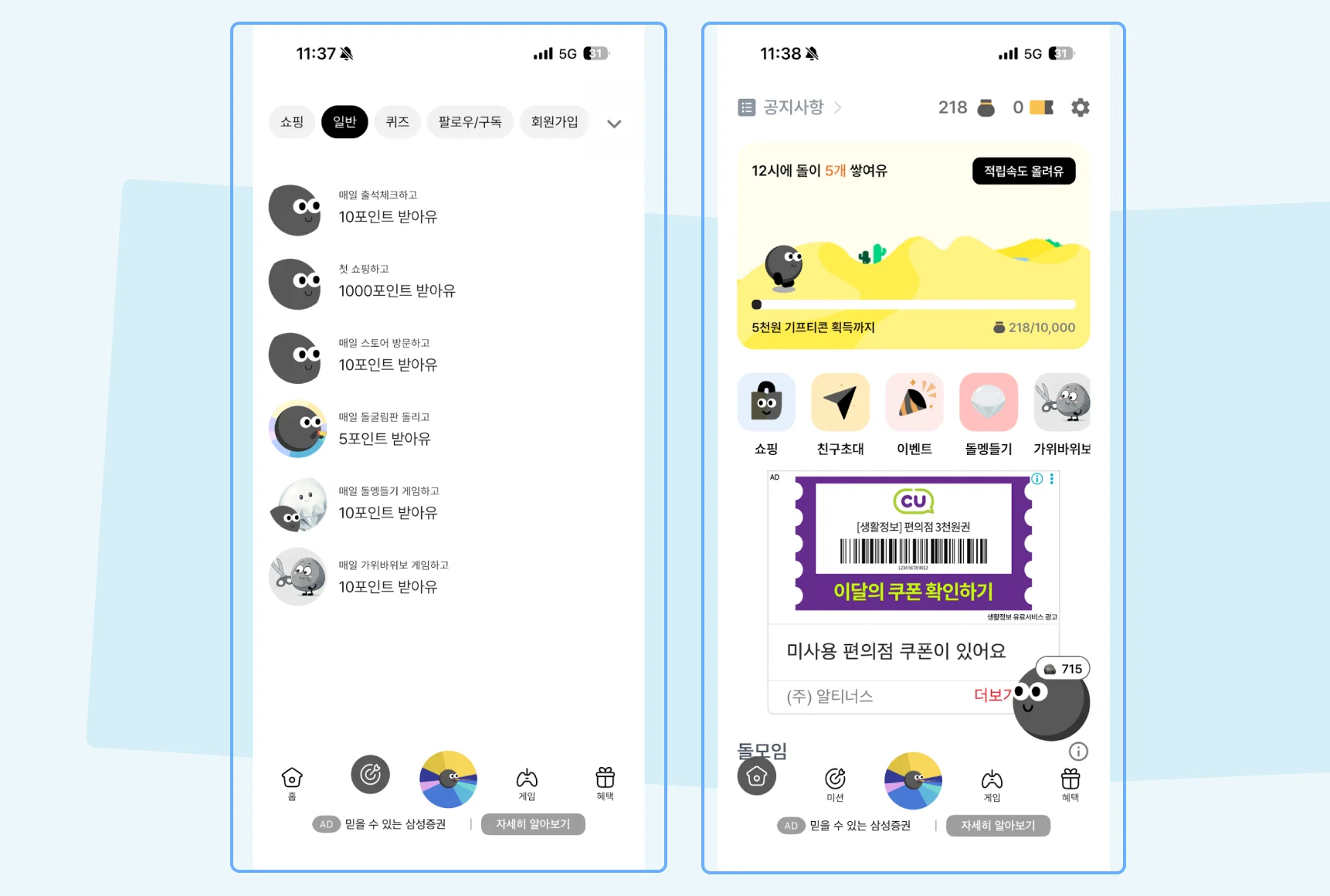
For example, the Korean rewards application Rock to You intentionally uses the Chungcheong dialect, notable for the characteristic "-어유" ending (e.g., "적립속도 올려유" - "increase your reward building speed"). I previously discussed this stylistic choice with the CEO, who explained his aim was to give the application a warm, neighborly feel.
In business, as with anything, there is no "perfect first draft." Your glossary and style guide will need revisiting as your goals and circumstances change. But an imperfect one that exists will always do more for your team than a perfect one that never gets written.
✂️ Point 2: Is your copy clear enough?
Concise and clear text is a must for good user experience. One of the mistakes that I see too often in Korean UX localization is direct translation.
Let’s say that you have to translate a CTA for your SaaS dashboard meant to encourage a user to upgrade:
The source: "Upgrade now to keep your files."
The literal translation of the source: "파일을 유지하려면 지금 업그레이드하십시오."
The suffix “하십시오.” indicates “order”, which is what most UX writers intend for CTAs. While users will likely understand the intended action, this phrasing feels stiff and unnatural to native Korean users.
After word choice, another mistake I still spot occasionally in Korean UX localization is overlooking readability. Returning to the same CTA example, this is a pattern I see from time to time:
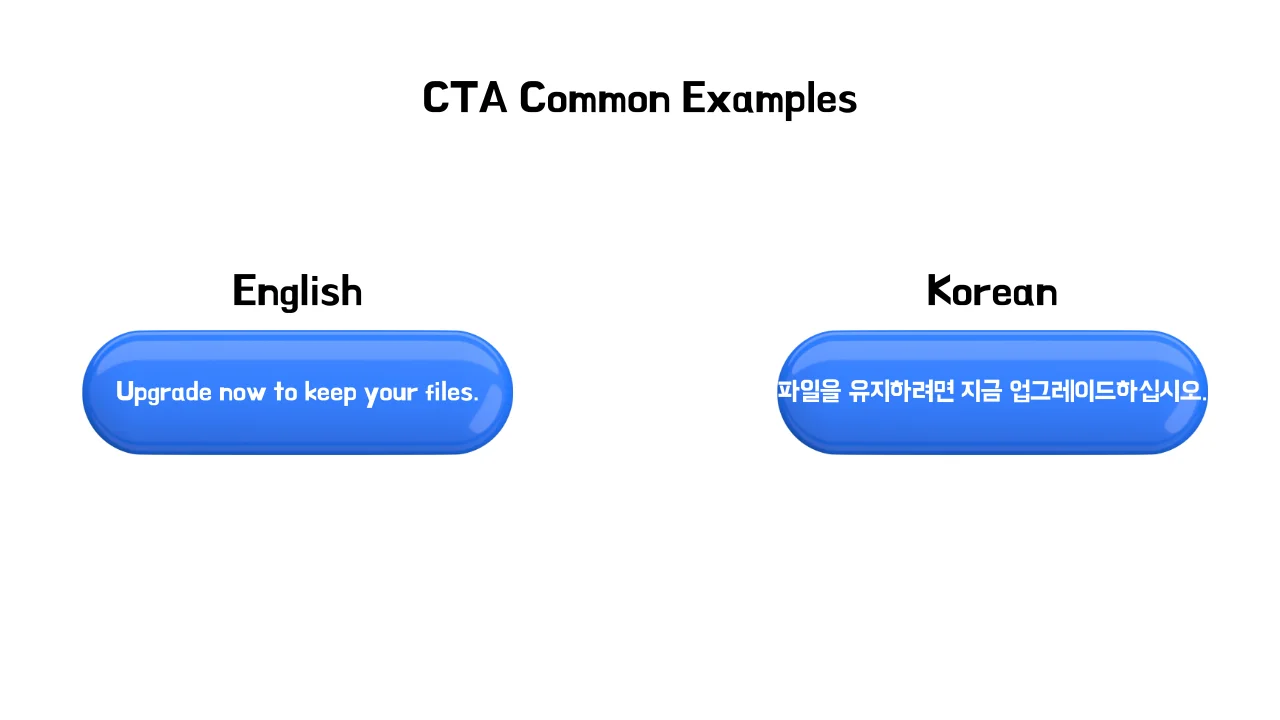
In the Korean version, the text fills the entire button with little to no padding. While English CTAs often allow comfortable spacing between text and other elements, the longer Korean copy leaves no visual breathing room, making the UI cluttered and less appealing.
In reality, adjusting visual assets specifically for the Korean locale is not always feasible. It will be ideal if different locales can have different spacing, but mostly that is not the case.
So, how should this CTA be localized?
In most cases, CTA copy should be as short and action-focused as possible. A more effective translation for this one would be “지금 업그레이드” or “지금 업그레이드하기”, both meaning “Upgrade now.”
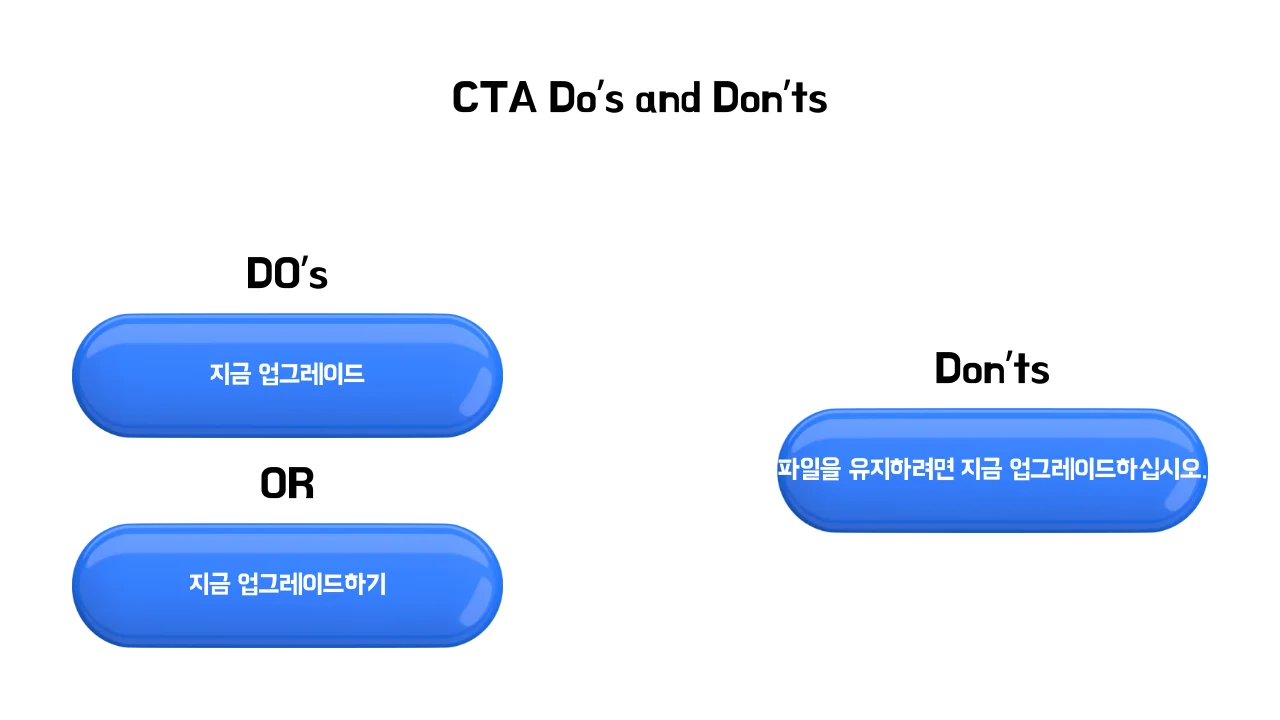
While skipping “keep your files” may raise concerns about altering the original meaning, Korean users will naturally assume file retention during an upgrade. For localizing CTAs in Korean, conveying the intended action clearly is more important than preserving every detail of the source text.
📘 Related read: 12 principles of UX writing (with examples)
👋 Point 3: Leave a good first impression
What good is good microcopy if the user experience itself is subpar? Clear copy only gets you so far. The overall user experience has to hold up too. And user experience starts when a customer opens your service and signs up. That's where first impressions are made.
Conventional email and password registration is a given, but incorporating sign-up options through global platforms like Google, Apple, and Facebook is always beneficial. Notably, these platforms are commonly used for both sign-up and login purposes in Korea as well.
Beyond the established global services, which local platforms should be your priority?
- Kakaotalk, an “all-in-one” messenger app.
- Naver, an “all-in-one” website with different features, including search, blogs, payments, etc.
- Toss, a fintech app whose service ranges from payment, banking and verification, all the way to investing.
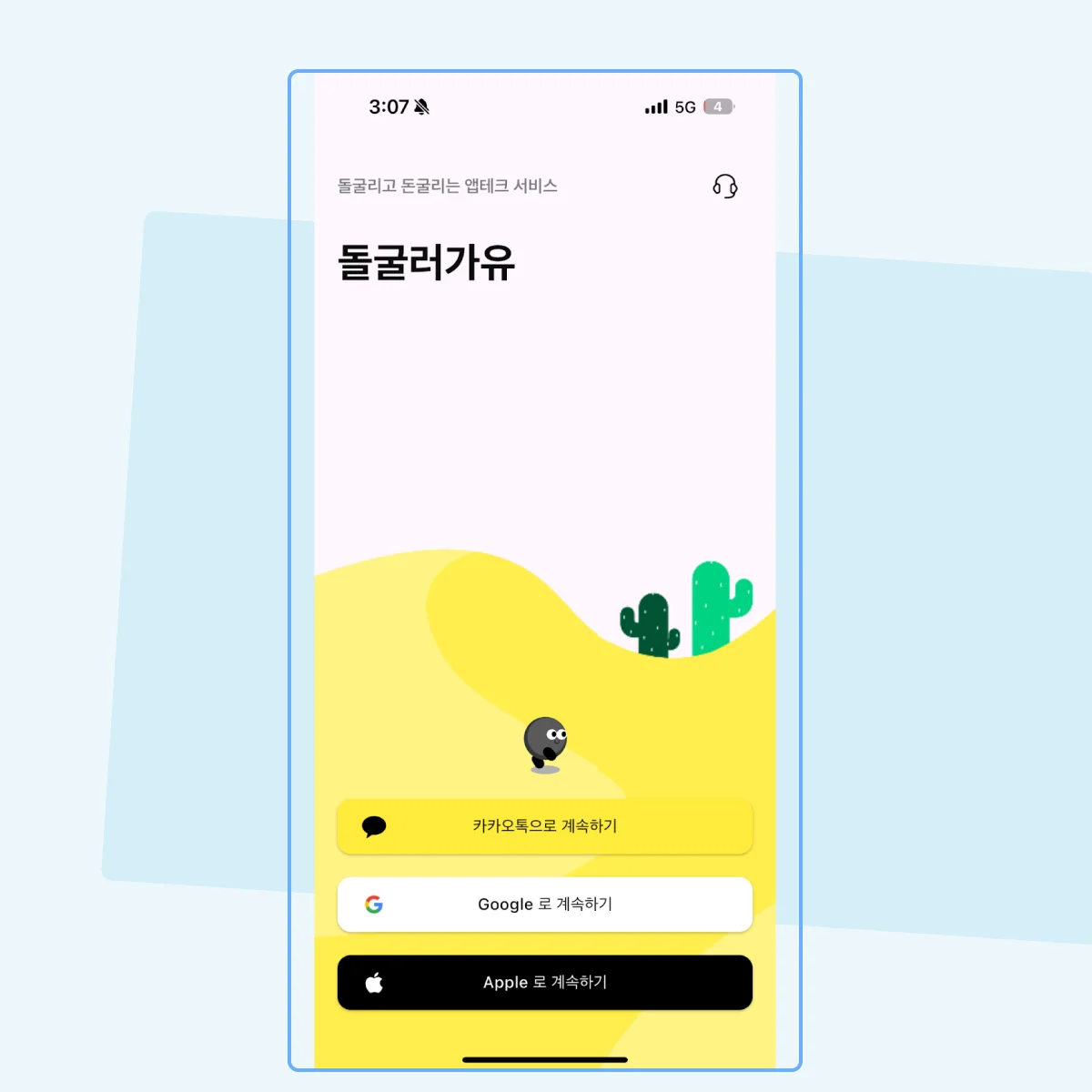
Let’s take a look at the sign-up/login page of Rock to You. This reward application, known for its friendly, neighbourly feel, offers users several sign-up options, including KakaoTalk, Google, and Apple.
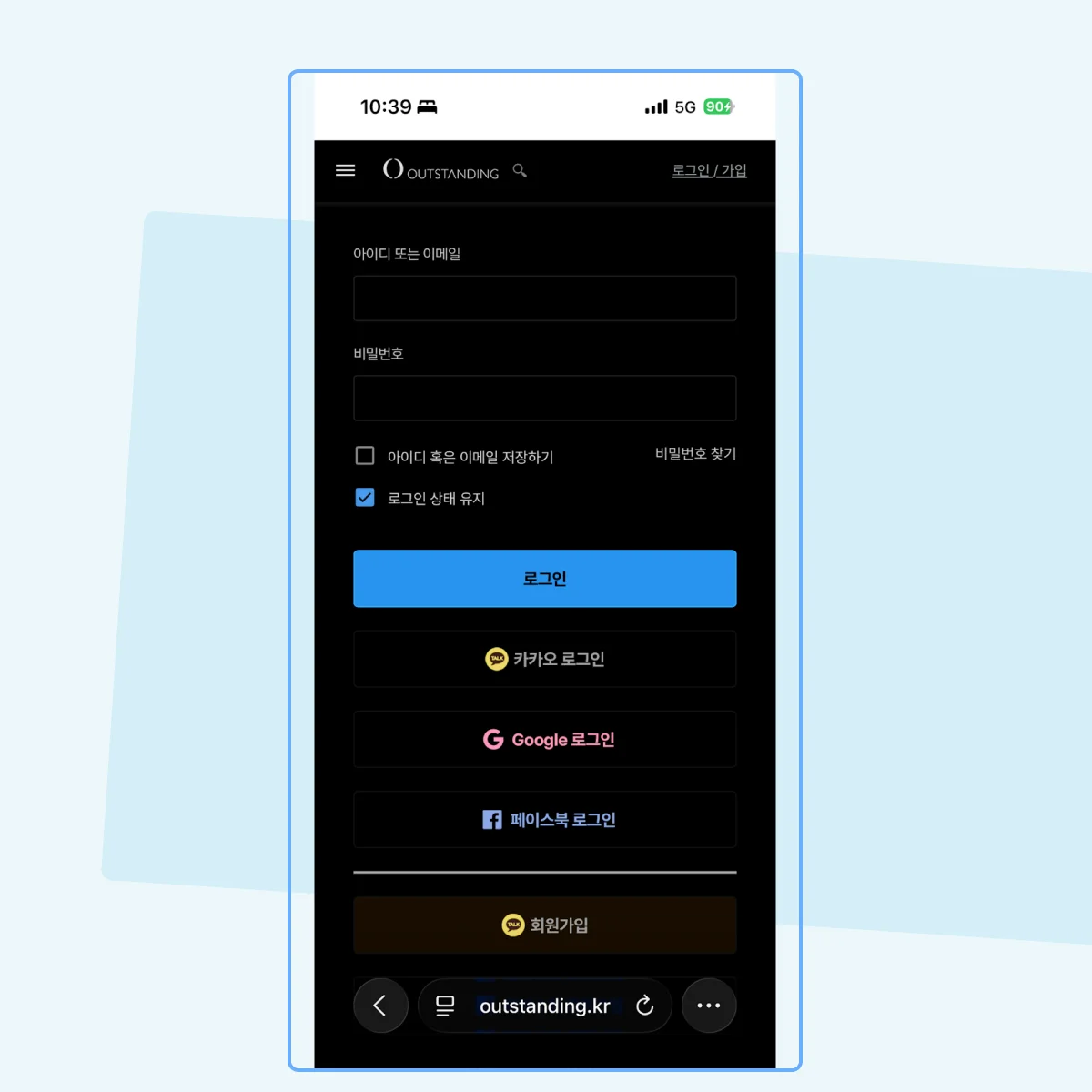
Now, let's explore other categories. Outstanding, a Korean online news outlet that focuses on startup and tech industry trends, also offers several log-in options: the traditional email and password method, as well as integration with Google, Facebook, and Kakao platforms.
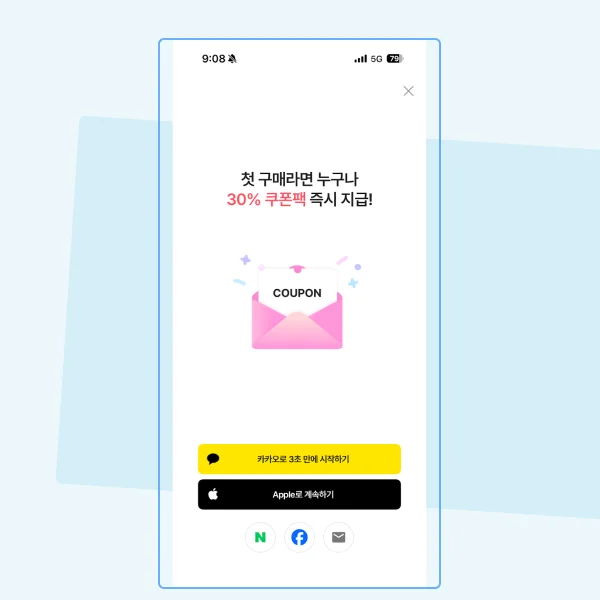
One last example before we move on. This time, let’s explore e-commerce. A-bly is a Korean fashion platform that is widely used by young women. While it initially focused on selling fashion items and perfumes, it has gradually broadened its product range to include categories that appeal to women, such as food and various lifestyle items. Similar to the previous examples, it has integrated multiple sign-in options like Kakao, Apple, Naver, and Facebook, as shown below.
Integrating every platform simultaneously might not be feasible. As the examples show, different companies use different ones and that’s completely fine. The key point here is to offer multiple login options.
💳 Point 4: Favor local payment systems
Your primary goals are revenue and profit. But users must be able to easily spend money on your product or service for you to succeed. Especially for B2C platforms, a robust local payment system is non-negotiable if you really want users to complete their journeys.
Many international companies might ask: “Wouldn’t PayPal work? What about N26, Revolut, or Stripe?”
The answer is, unfortunately, no. While PayPal might occasionally be used for international transactions, it is generally not an option if you are selling products to Korean users. There are many reasons behind it, such as complex regulatory requirements about financial services, but the main reason is that certain international platforms might not be available in Korea or favored by its users.
These are the most widely used domestic payment methods you should consider:
If your brand is B2B, payment and tax obligations work a bit differently. If you have a legally registered office in Korea, you should be able to issue a legally required electronic tax invoice called 세금계산서 (se-geum-gye-san-seo) for VAT deductions. If you do not have a local office, your client will have to issue the necessary documentation for tax purposes. However, due to the complexity of corporate tax law, I recommend checking with your Korean legal or accounting counterpart for definitive guidance.
Above all, if you are trying to sell some sort of service online, there is a registration that you have to do called “통신판매업신고”, which can be translated as “Mail-Order Business Registration Certificate” or “Online Sales Certificate”. You can look up the process online; it’s quite simple.
🔍 3 brand examples in practice
Let's see how these four principles play out in practice across different industries.
Fintech: Concise CTAs win
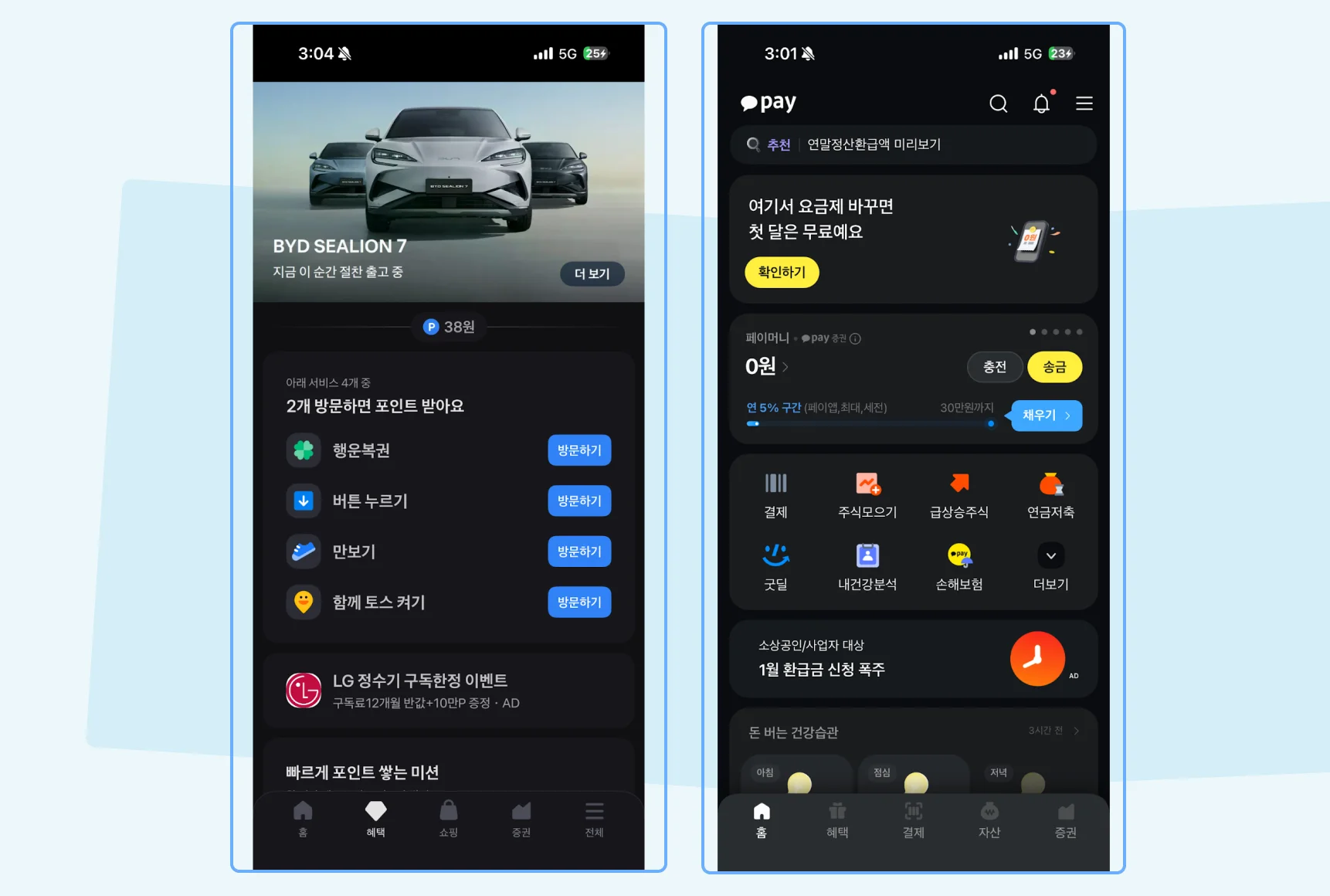
Let’s have a look at the UX of two of the fintech platforms we've mentioned above: Toss and KakaoPay. If you check their CTA buttons, you'll notice the text is very concise. A common variation involves adding -하기 (e.g., 방문하기 - "to visit") to the verb, while other CTAs simply use the base verb (e.g., 송금 - "to send"). Feel free to use either style, as long as you ensure the resulting text fits the design constraints.
Travel: Functionality & convenience
Airbnb is an app that is well-known, especially for those who are not fond of hotels! In my experience, it is also one of the best-localized apps for the Korean market, both in copy and in functional design. Take a look at the pink button on the activity page and the rooms page:
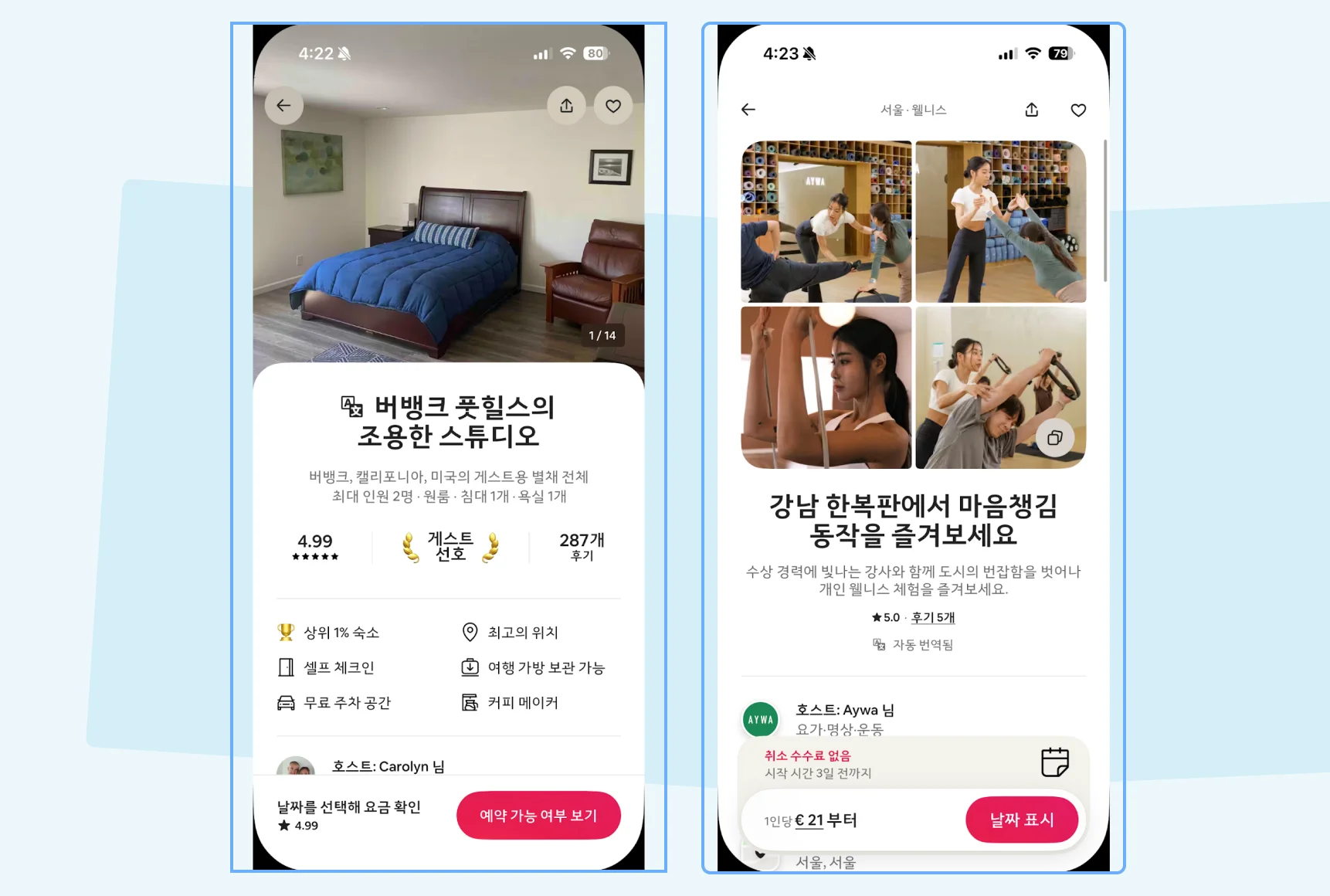
The CTAs are, again, super concise: 예약 가능 여부 보기 (‘Check availability’ in English) and 날짜 표시 (‘Show dates’ in English). As previously noted, the most effective practice for these CTAs is to conclude with a verb or the Korean grammatical forms -하기 / -기, a pattern which Airbnb's CTA strings effectively follow.
The Korean travel app NOL (Yanolja's travel booking platform) is another super app that offers extensive services like flights, hotels, and tours for both domestic and international travelers. The app's payment screen is highly convenient, offering more options than competitors like Airbnb, and including local platforms as Naver, Kakao, and Toss.
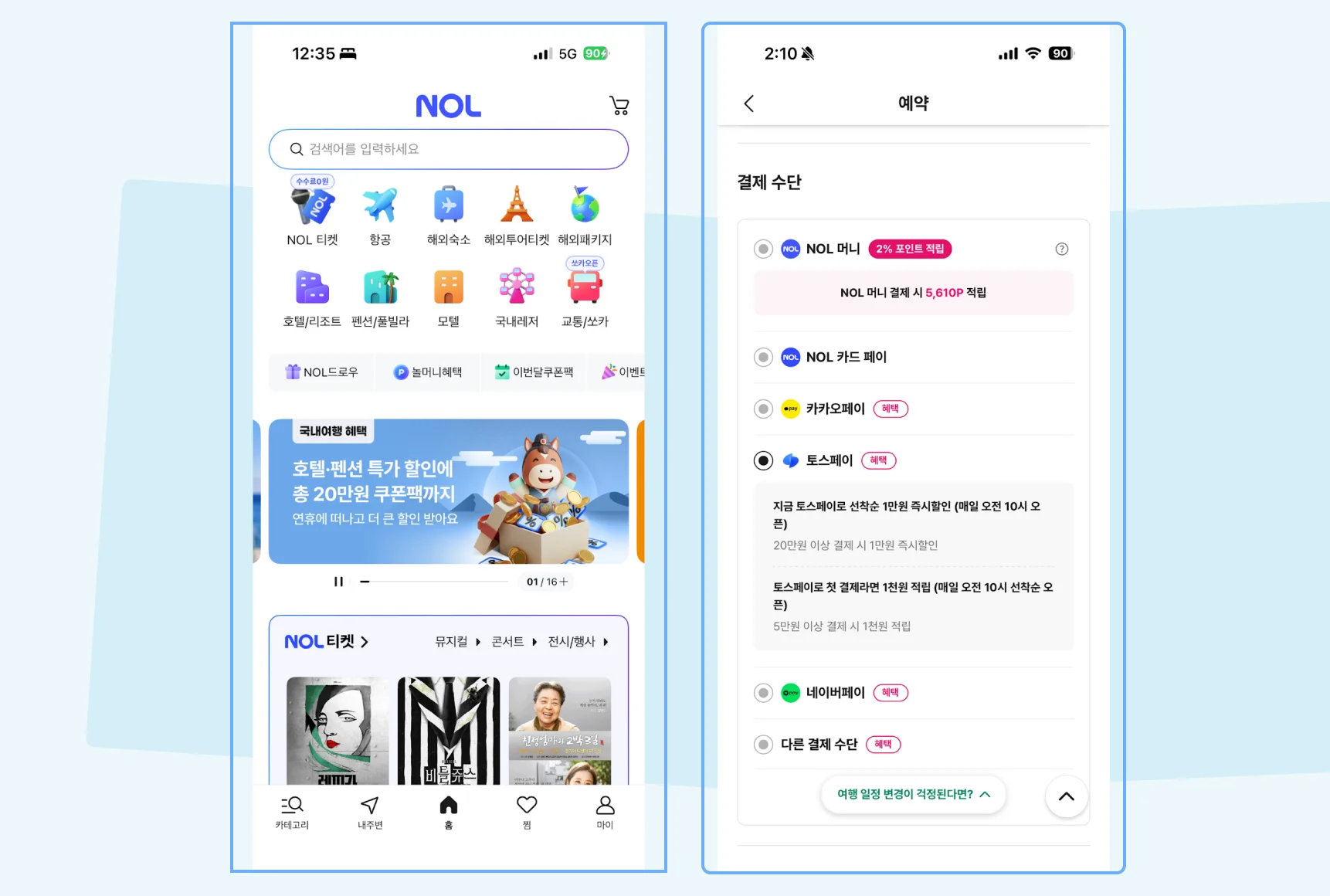
All these case studies prove that offering familiar services in one centralized platform incentivizes Korean users to stay. Given that most Koreans find speed and convenience important, this is your product's competitive advantage over other international platforms that fail to do so.
✔️ A tool that rises to the occasion
If you have made it this far, you already know Korea is not a market you can wing. It requires real commitment to localization, and tools that work for you. Concise copy respects how Korean users actually read and interact with their apps, a smooth sign-up flow with familiar local options signals that you understand the market, and local payment methods tell users you are here for real, not just testing the waters. You'll also need a glossary and style guide to help your team sound natural and stay on-brand.
Localazy offers you all the features to comply with the high standards of Korean users: from a Style Guide that you can apply across all your projects (whether you use AI, human translation or a mix of both) to a Glossary to keep your copy tight, an easy-to-use UI to onboard your team, and Automations to update and sync your Korean workflow cleanly. Try it out for free today or drop the team a line if you need assistance to set up your project.