In Accra, a wig vendor posts wigs on Instagram, buyers DM her, and every serious conversation —from prices, haggling, payment proof or delivery information— jumps to WhatsApp. In Lesotho, a furnituremaker can take batch orders from the WhatsApp group he has linked to his Tiktok business shop. Coffee shops, food kiosks, and roadside vendors today all accept mobile money payments via WhatsApp chatbots. As vast as Ekiti, Nigeria is, many farmers are only able to proactively decide whether to cull or vaccinate their sick birds when they send photos of them to a vet on WhatsApp and get guidance.
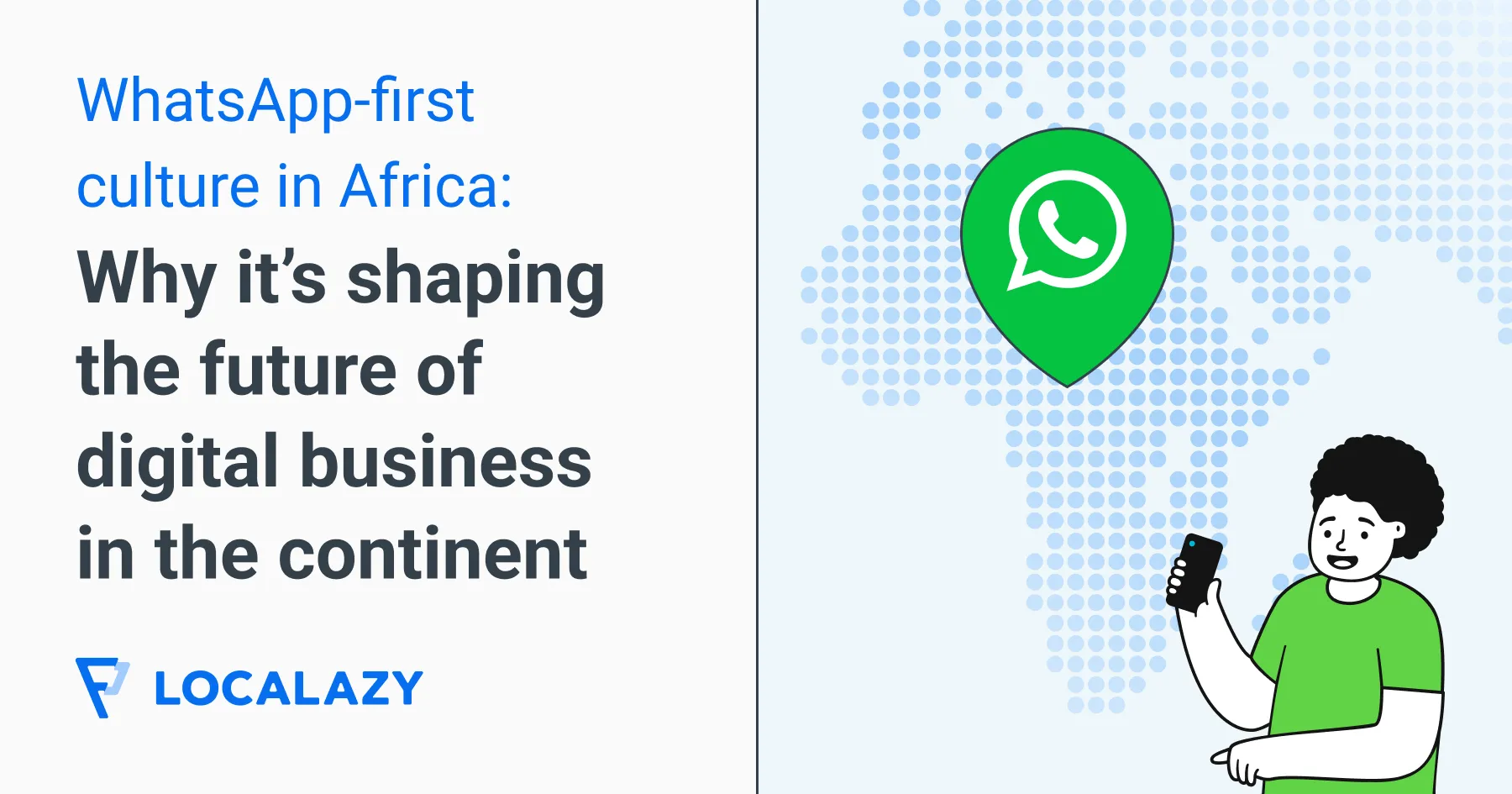
WhatsApp functions as the second most popular immediate entry point to the internet for hundreds of millions of Africans, according to a Rest Of World report. In Kenya, South Africa and Nigeria, 95-97% of mobile internet users use WhatsApp, making it a foundational part of the continent’s digital experience. As users already communicate there in their native languages, WhatsApp-based services are expected to do the same. A GSMA report on mobile internet adoption in Sub-Saharan Africa shows that many first-time and low-literacy users will disengage from digital services if content isn't in their native language.

💬 Why is WhatsApp the most popular digital platform in Africa? 🔗
Africa is the world's most linguistically diverse region, with more than 2,000 languages spoken across 54 countries. This diversity runs up against uneven connectivity, low-spec Android phones, and expensive data for connectivity. When users find a single, lightweight messaging app with free or cheap bundles from telcos, it becomes a staple. For Africans, WhatsApp is:
- Compatible with low-end smartphones.
- An image and media compressor that can still retain much of their quality.
- Where families, churches, trade groups, school alumni, and political campaigns thrive.
Analysts at Business Report described WhatsApp as a digital lifeline for the developing world and a core part of Africa’s tech evolution. It continues to prove to be so. With the launch of its successful business optimized version, WhatsApp Business, this means in practice that:
- Small shops can manage catalogs, orders, and delivery entirely by chat.
- Health workers in Southern Africa can improvise hospital systems through WhatsApp referrals when official tools fall short.
- New AI services can launch first as WhatsApp bots because that’s where users actually are.
For the longest time, WhatsApp Business used to be small-scale vendors leveraging its catalogue options and automated responses to showcase and manage their businesses. Now, full-scale startups are building their entire programs on WhatsApp.

📲 The African tech startups building on WhatsApp 🔗
From payment systems to veterinary services and fully-embedded e-commerce stores, these startups want to reach as many customers as possible on WhatsApp.
Doorcas’ veterinary proposition 🔗
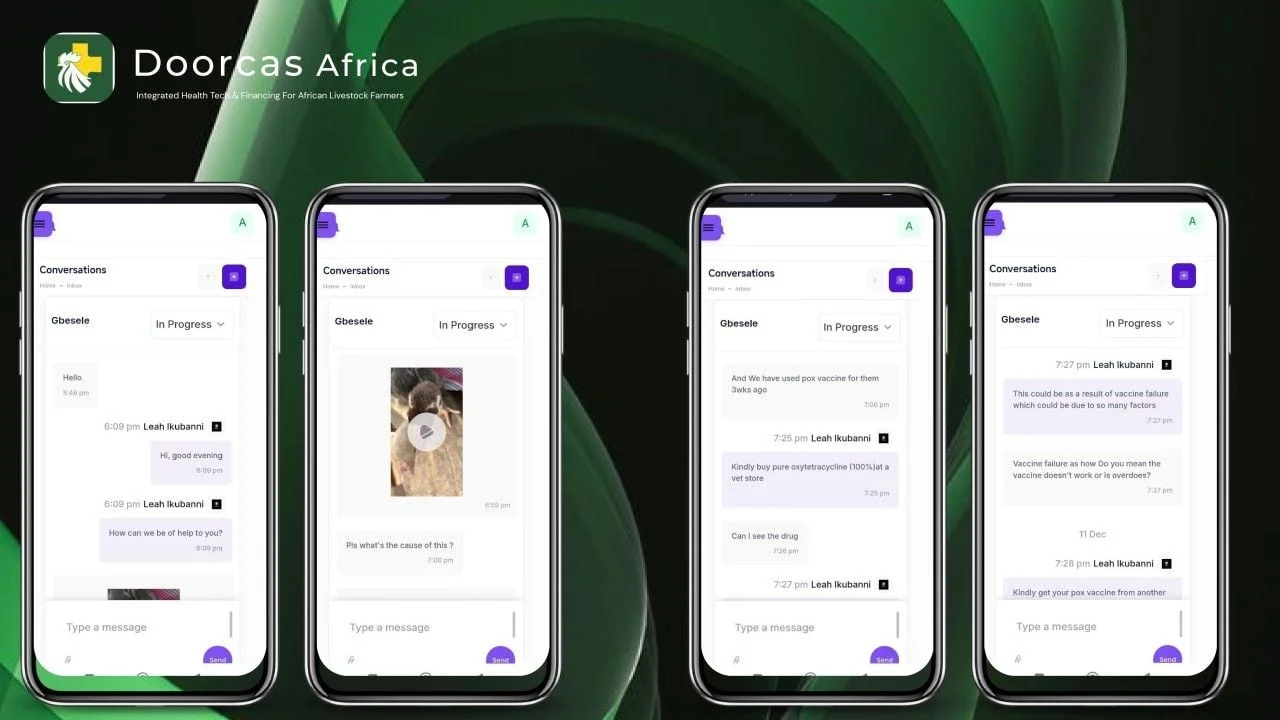
Doorcas started with a web app but farmers wouldn't use it no matter how simplified they made it. “Right now on our web app, you only need your phone number and a password to set up an account,” founder Abayomi Olode says. “But people still don't use it. We thought of something they'd be more familiar with and realized it was WhatsApp. They feel that it is faster and they already use it well.” In Nigeria, where 40% of all households keep livestock and where WhatsApp penetration exceeds 90% among smartphone users, it seemed the most realistic option for Olode and his team.
Once the company became WhatsApp-based, farmers could reach them with a simple text. They are able to report issues, share pictures, or even send videos of sick animals directly through the app, which Doorcas logs into their system. “We couple their shared information with AI algorithms to predict diseases before they occur,” the founder explains. The company’s strongest hook is a free physical farm consultation, something that instantly builds affinity. “It is our best USP yet.”
“On our web app, you only need your phone number and a password to set up an account. But people still don't use it. We thought of something they'd be more familiar with and realized it was WhatsApp. They feel that it is faster and they already use it well” - Abayomi Olode, CEO of Doorcas
Nigerian farmers rely heavily on emotional cues in conversation, so while quick replies help Doorcas handle simultaneous emergencies, they never let automation dominate. “We jump in as fast as possible so they know there’s a real human behind the message.” Many users switch between Yoruba, English, and Pidgin as they talk, expecting the responder to mirror them. “If you speak English only, they don’t feel like you can understand their problems,” Olode explained. “But once you switch to the local language, then they want to have sincere conversations.”
As Doorcas expands to Northern Nigeria, language becomes even more complex. Their Kaduna-based vet speaks Hausa, yet still struggles with deeply indigenous dialects. “She told us the Hausa there is so deep, she must listen very attentively to understand,” Olode says. Many times, they’ve had to bring in local translators to ensure that context is not lost during conversations. In Hausa or Yoruba, words can be spelled the same, but carry entirely different meanings depending on pronunciation.
The company also uses a reminder system which helps farmers vaccinate at the right time, Olode adds, despite many farmers not believing in vaccines.
Set up a quick shop with Ghala 🔗
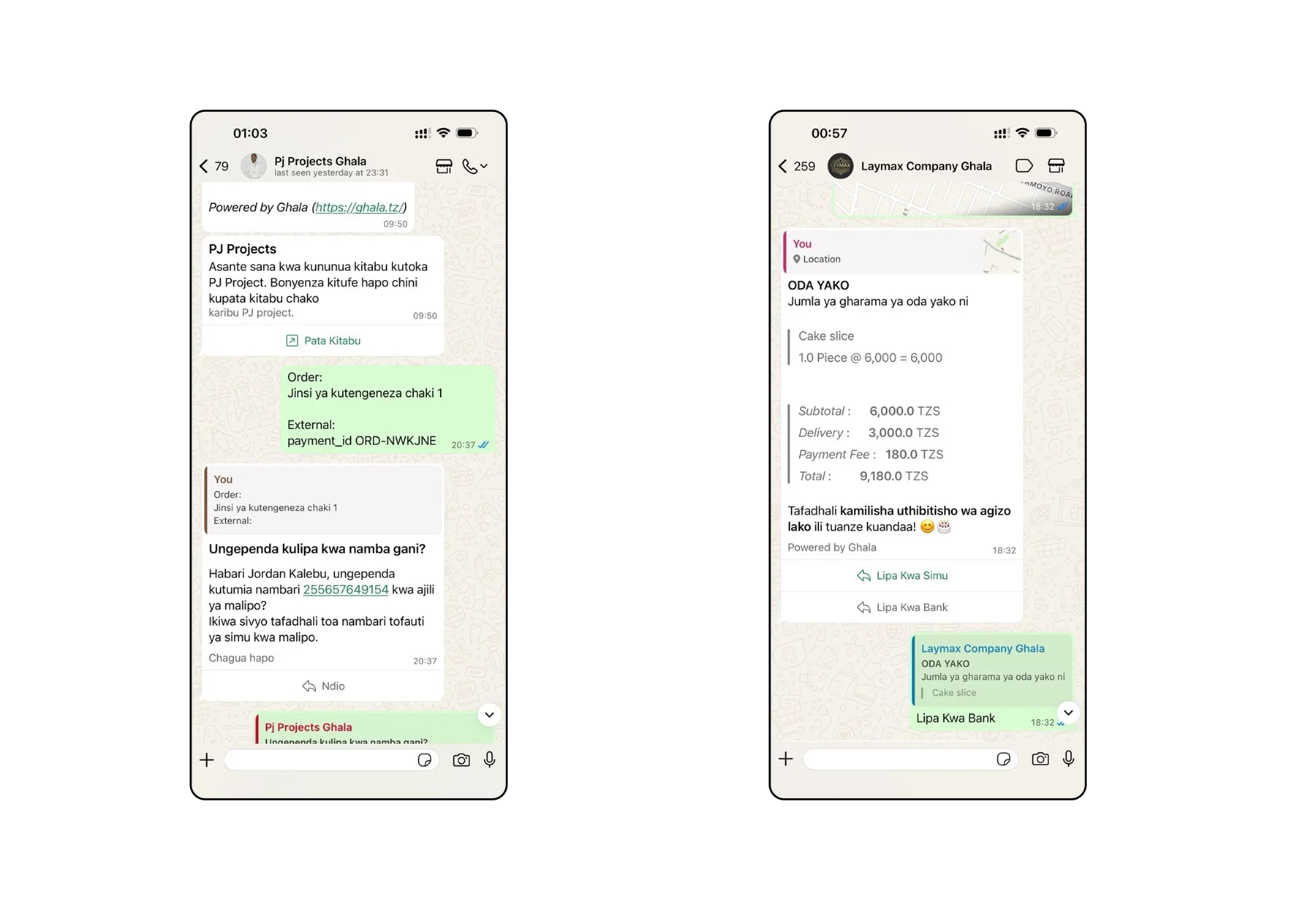
For many business owners in East Africa, WhatsApp is a checkout platform, says Daniel Kalebu, founder of WhatsApp-based e-commerce shop, Ghala. “Social platforms help attract buyers, but the actual sale nearly always moves to WhatsApp,” he states. “To us, this is where negotiation happens, trust is built, pictures are shared, and orders are confirmed,” he explains. But despite this massive behaviour shift, WhatsApp commerce remained painfully slow. The startup currently serves all types of small online businesses and all orders, questions, and verifications had to be handled manually. “This process didn’t scale well with marketing and eventually, merchants simply couldn't keep up the traffic.”
Ghala introduced an AI layer to replicate what a human seller typically does: answer questions, recommend products, build carts, confirm payments, reconcile orders, etc, but at an infinite scale. Their system now automates about 98% of customer interactions, and only triggers an escalation when human attention is genuinely needed. “If there’s something that requires the merchant’s eyes (a complaint, an angry customer, or a very custom order), the system notifies the business owner to jump in,” says Kalebu.
“Social platforms help attract buyers [...] Whatsapp is where negotiation happens, trust is built, pictures are shared, and orders are confirmed” - Daniel Kalebu, Founder of Ghala
The company has integrated features like WhatsApp Flows, which allows them to render complex forms and menus. In fact, by using Flows for a ticketing client, they were able to reduce the entire booking time from ten minutes to about two. Kalebu likens it to an emerging “Play Store of the future”. The Ghala Merchant App extends this further by giving sellers analytics, chat monitoring, and even in-store POS functionality.
Whatsapp for conversational payments in fintech 🔗
WhatsApp-based services are even more strengthened within the fintech sector, where users expect services to be instantaneous and confidential:
1. Semoa, a Togolese fintech, developed Express Cash by Semoa on top of WhatsApp to turn simple chats into full banking processes for Ecobank customers in Togo. It also operates in the wider West African Economic and Monetary Union (WAEMU) region. Customers text a WhatsApp bot called Dédé to generate tokens with which they can withdraw cash at ATMs, pay bills, or transfer money across borders.
2. In partnership with Clickatell, Yabx is a digital lending company providing WhatsApp-based microloans to Africans. It uses a simple chat flow through which customers can request, receive, and manage credit in real time from WhatsApp. There's no need to download another app or fill difficult web forms. In regions with little access to formal credit systems, this chat-first lending model makes short-term borrowing seamless.
3. OWO, built by Nigerian open-banking company Mono, uses WhatsApp as a payment pillar for everyday transactions in Nigeria. Users link their bank accounts once; then they can send money, pay bills, and do business from WhatsApp with text, images, or even voice notes, with OWO converting those messages into secure transfers. Tech Cabal reports it has already processed over ₦1 billion in volume. In the same article, Mono’s CEO Abdulhamid Hassan shared that it's a way to tap into the needs of tens of millions of Nigerians who already discuss money on WhatsApp but don’t want another banking app.
4. South Africa's Mama Money extends its low-fee international remittance service into WhatsApp. Low-income users can register, send money, manage a Mama Money Card, and handle support via dedicated WhatsApp numbers instead of relying solely on an app or branch. The company has collaborated with Access Bank and Paymentology to let users transfer funds internationally, buy electricity and airtime, and check balances inside the chat with their WhatsApp-powered card.
📦 WhatsApp’s features are reshaping product design 🔗
Founders Olode and Kalebu both say it's easier to build around established behavioural cues than to create new ones. Nothing is more established across Africa than the muscle memory that comes with using WhatsApp. This is why product teams are now building solutions that feel chat-based, mimicking WhatsApp’s flow, and centering conversational interfaces instead of traditional screens and menus.
One example is Kowri's voice pay option, where users can pay for bills and send money using voice commands. This works not only in English but also in two other local Ghanaian languages: Twi and Hausa.

In francophone West Africa, Julaya leans heavily on conversational design for merchant onboarding. It replaces long form text sequences with short, question-and-response ones, as you'll see on WhatsApp.
Ghana’s ZEED and Nigeria’s Bumpa have similarly structured merchant actions (think inventory updates to sales confirmations) as chat bubbles that slide up the screen instead of typical modal windows.
Even mobility and logistics apps are following suit. MAX, a Nigerian mobility platform, redesigned its driver app to function like an active chat window: real-time updates about rides appear as stacked message blocks, while driver support and safety alerts are delivered through a WhatsApp-like conversation thread.
Voice notes are taking over long input fields. Single-screen conversational flows are replacing multi-page onboarding. Buttons are getting smaller, rounder, and more “WhatsApp-shaped.” Even features like inline images, quick-reply chips, and tap-to-share locations are becoming standard, regardless of industry

🤔 Is it worth building around a WhatsApp culture? 🔗
Short answer is yes. WhatsApp has set the behavioural baseline for how Africans expect to interact with digital services: simple chat-flows, minimal typing, fast media sharing, clear prompts, familiar layouts, and immediate human-like responses.
Any product that ignores this risks heavy user drop-off, costly onboarding, and low trust. To mimic WhatsApp’s interaction style is to gain instant usability, faster adoption, and access to millions of users who prefer chat-based navigation over traditional app interfaces. Digital literacy varies widely across countries, but data costs remain high-end consistently. A WhatsApp-like design can prove highly efficient.
👉 How to start localizing for WhatsApp-first African markets 🔗
Here are some important points to consider when building for a WhatsApp culture:
1. Interface flows should mirror chat over traditional apps 🔗
African users prefer conversational navigation. Consider replacing long forms with question-and-answer flows, status updates with message bubbles, and dashboards with simplified threads.
2. Localize language, but also tone 🔗
African customers judge products heavily by how natural they sound. A Hausa prompt that’s too formal or a Twi instruction that uses a wrong tonal mark can immediately break trust and question brand authenticity. Tone-aware localization is non-negotiable here.
3. Prepare for code-switching as the norm 🔗
Many African users will switch between languages (and even sometimes dialects) mid-chat. Products must be ready for multilingual UI support.
African users value conversational navigation and highly localized interactions. They also code-switch frequently. You need to consider these preferences when building for them
4. Use localization tools early in product design 🔗
Instead of bolting translation on at the end, foreign innovators need to design language-first workflows that enable them to upload text prototypes, test UI tones across multiple markets, and refine the interface before shipping through localization testing.
5. Make trust the core of expansion strategy 🔗
WhatsApp works in Africa because it feels personal, informal, and direct. As a foreign innovator (introducing a foreign product), you will need to recreate this emotional familiarity, not just functional parity. A trustworthy localization tool will be central to achieving this trust at scale.
💙 How can Localazy support startups building for WhatsApp-first localization? 🔗
Localazy offers a range of contextual tools that can position you as a human-front service even when you only automate. Here are some features I've noticed that can help whether you localize for WhatsApp or not:
1. Static UI text localization 🔗
These are the buttons, menus and labels inside chat-like interfaces that give your users a dynamic communication experience: “Send Message,” “Order History,” “Mark as delivered.” Localazy can handle these by providing consistent translations across Yoruba, Hausa, Swahili, Xhosa, Zulu, Amharic and more, ensuring the UI matches local communication norms and that different word lengths don't break the design (for example, via their Figma plugin).
2. Quick replies and predefined prompts 🔗
WhatsApp-like interfaces depend on ready-made chat snippets such as: “Welcome to [company name] support, how can we assist?" or "Would you like pay with [Apple Pay] or [Visa]?" Localazy allows teams to create a Glossary for their brand that ensures these terms are not translated and kept in context.
📩 If you prefer using helpdesk platforms instead of building your own chat-like UI, you can also localize your user comms with Localazy's Intercom and Zendesk integrations
3. Multi-language chat flows 🔗
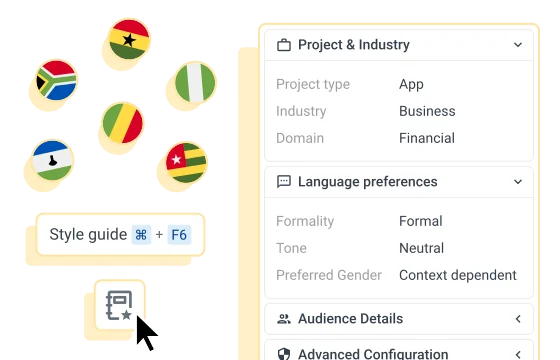
If you're building a chat-based interface similar to WhatsApp Business, like step-by-step onboarding, or basic Q&A prompts and structured requests, Localazy can help you build a consistent flow. It helps developers set the intended tone (friendly, neutral, concise, professional) via Style Guide, with Localazy AI preserving it across all target languages.
5. Context-aware localization 🔗
Localazy’s context features, like translation notes, comments, or screenshots, allow startups to show where text will appear: on a chat bubble, as a quick reply, or in a confirmation message. Users don't want literal translations that ignore tone, dialect or their previous chat behaviors.
6. Industry-specific terminology 🔗
Lastly, every industry has its unique jargon/lingo. Again, Style Guides and Glossary help here by ensuring the correct terms are used consistently and contextually, even when users switch languages mid-conversation.