I stood in a Kuwaiti field in 2003, trying to explain to a Bedouin shepherd why he needed to move his sheep. I spoke Modern Standard Arabic that I had spent 64 weeks learning in the US Marine Corps. The shepherd stared at me, shook his head, and walked away with his flock. Technically, the mission was accomplished… But I suspected he hadn't understood a word I said, because he probably didn't speak standard Arabic at all.
That moment taught me something that would shape my entire career: knowing Arabic isn't the same as knowing which Arabic dialect to use. Twenty years later, as a program manager for clinical outcomes localization at Lionbridge, I spend my days preventing companies from making million-dollar versions of my shepherd mistake.
🪖 My path from military intelligence to clinical trials 🔗
The US Marine Corps sent me to the Defense Language Institute after I graduated high school in 2000. The training was intensive: 64 weeks total, with the first month focused entirely on sounds and the writing system. When I got deployed, my work centered on intelligence collection, transcription, and translation in Arabic. I spent five years reviewing information and catching things that other linguists usually missed because they didn't understand cultural context.
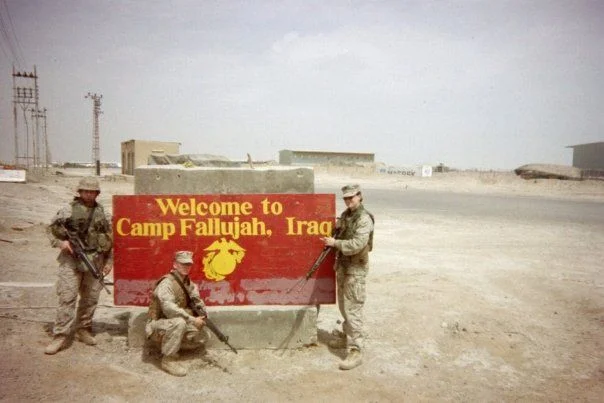
After the military, I studied linguistics as a science, focusing on sociolinguistics, where language and culture intersect. That foundation helped me understand not just how to translate Arabic, but why different approaches work for different contexts.
Today, I manage the localization of clinical outcomes assessments. In plain language, this means I work on questionnaires used to collect data in clinical studies. All of it requires precision because mistranslations of this type of sensitive information can invalidate years of research and throw millions of dollars in drug development down the drain.
⚠️ Four industries, four mistakes 🔗
Design & signage: A broken RTL layout 🔗
My first encounter with corporate Arabic failures came in a welcome box. I'd just started at GLOBO, an over-the-phone interpreting company. They sent me marketing materials in multiple languages. I looked at the Arabic translation of “welcome” and immediately saw there was a problem, but they'd already paid for professional translation and distributed these materials to partners, clients, and hospitals across their network. Their answer to my feedback was depressingly simple. The translation had been correct originally, but then they put it in InDesign without configuring the right-to-left settings properly, and chaos ensued. The Arabic script was reversed, text direction was wrong... One misplaced dot had changed entire words.
Years later, working on hospital signage for the same company, I warned them multiple times that some materials would be problematic when they went through design. I needed to check the final output before they printed anything. The design team declined my review, printed thousands of signs, and distributed them to hospitals. Months passed before a patient finally noticed. The Arabic was backwards and meaningless. There were similar errors in other languages, too. Our name was all over those signs, so you can imagine the impact on our reputation.
Ahmed Megahed, a localization program director who spent years in sales and account management, confirms this pattern repeats across the industry:
“When I used to work in sales and tried to explain why Arabic needs special technical handling, clients would think I was trying to oversell.”
The technical reality is just straightforward: Arabic isn't compatible with standard Western design workflows without explicit configuration. The Arabic script, where letters connect and change shape based on position, simply breaks when formatting isn't set correctly. Visual verification by native speakers is a non-negotiable because (as you can see), a single mistranslated hospital sign error tells every patient that you didn't care enough to check.
Intelligence: When my expertise wasn't enough 🔗
Most Western brands start from complete ignorance about Arabic dialects. My first job after leaving the Marines illustrated this perfectly. I worked for a company contracted with the Bureau of Prisons, transcribing phone conversations between inmates and their families. They assigned recordings based on my military intelligence experience. I listened for about an hour, then went back to management explaining that I couldn't understand a single word. My specialty was Iraqi Arabic and this was a Yemeni dialect.
One of the managers questioned whether I actually spoke Arabic. Another manager, a native Spanish speaker, finally made them understand. She explained it like someone from Argentina trying to understand someone from Colombia. No amount of intensive Arabic training prepares you for every dialect. To me, Egyptian, Iraqi, and Lebanese are really separate languages.
As an Egyptian Arabic speaker, Ahmed reinforces this reality from the vendor side:
“I cannot understand Moroccan people when they speak to each other. It's not one size fits all.”

Health: Dialects can work against you 🔗
But there's the other side of the coin. Once clients understand dialects exist, they often swing too far in the opposite direction. They demand specific dialects when Modern Standard would actually work better.
My Tunisia project exemplifies this. The client specifically requested Tunisian Arabic and French for a clinician-reported outcome assessment. This was a highly technical medical document that doctors would complete. The clinician would be highly educated and understand the standard terminology, which is the most commonly used in these instances. Nothing in the content would require specific adjustments for Tunisian culture.
Modern Standard Arabic would let the client deploy the same assessment across every Arabic-speaking country. Insisting on Tunisian Arabic limits them to Tunisia and requires creating new translations for every new market they enter.
For health, law and technical industries, Modern Standard Arabic is usually a better choice than a dialect when it comes to reports and documentation
I spend an enormous amount of time convincing some clients that dialects matter. When I then tell other clients that Modern Standard is the right choice, it feels like I'm contradicting myself. But the context determines everything:
- Marketing to recruit for clinical studies needs dialect-specific content because you're trying to reach hearts
- Reports where patients describe their daily experiences need cultural and linguistic specificity
- For clinician-reported outcomes, legal documents, or technical specifications, it's safe to say that Modern Standard is enough, because it reaches everyone without limiting your geographic scope
In summary: the dialect decision requires context and expertise, not assumptions about what "premium" localization looks like. Ahmed points to Netflix and Amazon as success stories, noting that Netflix's localization manager came from Iraq and understood the nuances: “She really understood how to act and when to localize to which locale.”
Marketing content: Safe only in theory 🔗
"Marketing content is low-risk". This was the assumption behind a massive localization project for a large pharmaceutical company. The materials were documents explaining what the clinical trial involved and the source English was packed with idioms. One phrase in particular stood out: “Out of the blue”.
When reviewing the back-translations, I noticed something odd. Every single language returned the phrase translated word-for-word. That shouldn't happen: when content is well-localized, back-translations show how translators interpreted and adapted the meaning. I checked the Arabic directly. It literally said “out of the blue”. Four English words dropped into the Arabic text and were completely meaningless to Arabic speakers. We had already delivered this whole project with materials that would mean nothing to the patient population we wanted to address.
In the end, we needed two extra weeks to go back and redo everything. After investing millions of dollars and months of work, the company was risking getting participants for their clinical trials because the recruitment materials didn't make sense. We simply couldn't accept this alternative.

In my current work with clinical outcomes assessments, the stakes are even higher: invalid translations mean invalid data collection. This leads to regulatory agencies rejecting your submission and, ultimately, the drugs that could help patients never reach the market.
In this instance, the solution starts before translation begins with source content that is localization-ready. You need to remove idioms, eliminate culturally-specific references that won't transfer across languages, budget for back-translation validation on critical content... It's painful, but the cost is negligible compared to the cost of failure.
☝️Context matters more than budget 🔗
I've spent 25 years building expertise. I understand dialectical variations, cultural context, and industry regulations, yet clients regularly doubt my recommendations.
I believe this resistance is just psychological. I sometimes spend too much time convincing people that dialects are important, but then I have to rework my previous argument when Modern Standard is the right choice. Clients, however, just perceive this as an inconsistency. The resistance also comes from sponsors who make geographic decisions without understanding linguistic implications, as I mentioned earlier regarding the pharmaceutical company in Tunisia.
In all of these cases, what I actually want as a localization manager isn't more money or longer timelines. I want complete project context. What's your content? What's the goal? I want to know all of that so I can give you the best solution.
Ultimately, successful Arabic localization comes from companies that don't treat it as a commodity. They understand they have to be strategic to reach their final audience and provide complete project context. They also trust expert recommendations, even when those recommendations seem counterintuitive, because localization teams have seen projects fail and know what works. Give them the information they need and trust their judgment.

👂 No need to be an expert: just listen to one 🔗
That Bedouin shepherd walked away with his flock, and I (somehow?) completed my mission. What I learned was that language competency means nothing without cultural understanding and contextual judgment.
25 years later, the same lessons from companies making these "shepherd mistakes" come up over and over:
- Technical preparation matters, because Arabic breaks standard Western design workflows. This is why I recommend budgeting for technical QA, not just linguistic review.
- Dialect decisions require context. Technical, medical, and legal content works with Modern Standard Arabic. Marketing, entertainment, and patient-facing content needs dialect-specific localization. Geographic specificity isn't always better.
- Source content quality determines translation quality. You can't localize idioms that don't transfer across cultures. Remove culturally-specific references before translation begins.
- Expert judgment beats assumptions. Your localization team has encountered patterns you haven't seen and will work infinitely better if you give them complete project context.
The Arabic localization landscape confuses Western brands because it demands something counterintuitive: sometimes more specificity is wrong. Sometimes the premium option creates limitations. Sometimes standardization reaches more people than hyper-localization.
Companies that understand this get their hospital signs right and end up collecting valid data through their localized clinical trials. The good news is: you don't need to become an Arabic linguistics expert. You just need to work with people who are experts and actually listen to them.