New features here, new AI tool there.
In the last three years, nearly every single day has been shaped by AI-powered launches. Sometimes these new creations solve real problems, other times, they’re only a shiny distraction. Sometimes they overpromise and underdeliver; other times they prove to be better than any marketing slogan.
Where does Localazy AI fit in this spectrum? Let’s have a look at the promise first:
That’s a big claim to live up to. And if you’re a translator or someone working daily with those inquisitive creatures, your first reaction might be: Sure, maybe it does, but for all projects? For all content types and language pairs? What if my style guide is super specific, packed with rules on gender neutrality, or instructions on how to deal with creative content? Is it equally useful for technical and marketing texts, or does it only excel in one domain?
Since I happen to belong to those curious creatures, I’ve decided to put that claim under the microscope.
🎲 The rules of the game 🔗
Three language pairs, two texts, one tool that unites them all: Localazy AI.
This test assesses how the new feature works with technical content and marketing copy. Both texts were translated with Localazy AI from English into Polish, German, and Spanish. Each source contained 400-500 words and was accompanied by a glossary with 10 terms and a style guide with detailed information, such as tone of voice, examples of preferred translation, or untranslatable terms.
For each text, I created a separate project with three languages and one style guide. The style guide included instructions for all three locales, with exceptions, if relevant, on how to approach translation in another language. For example, for German, the marketing copy and the manual had to be formal, and for other languages, informal. These exceptions make for a great opportunity to test if the tool can deal with language override instructions.
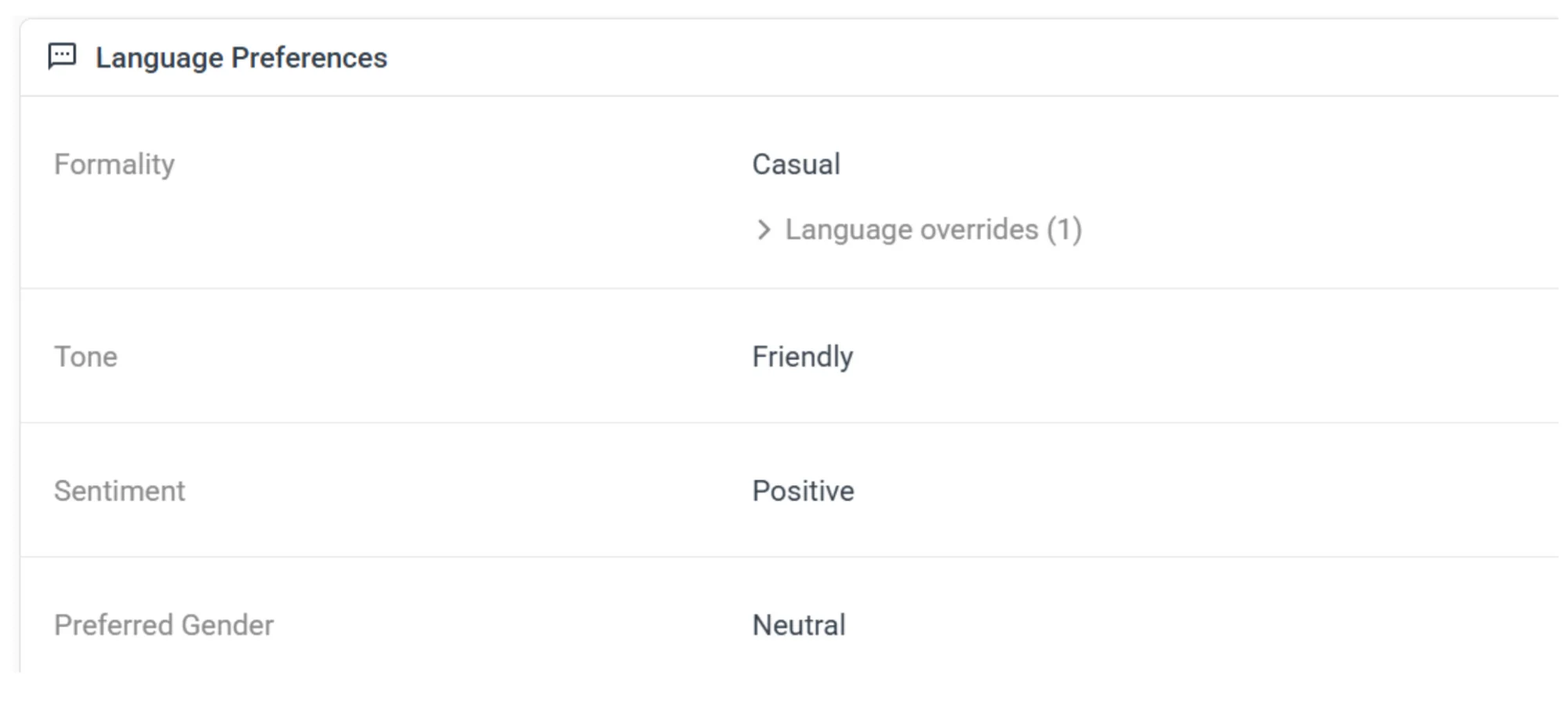
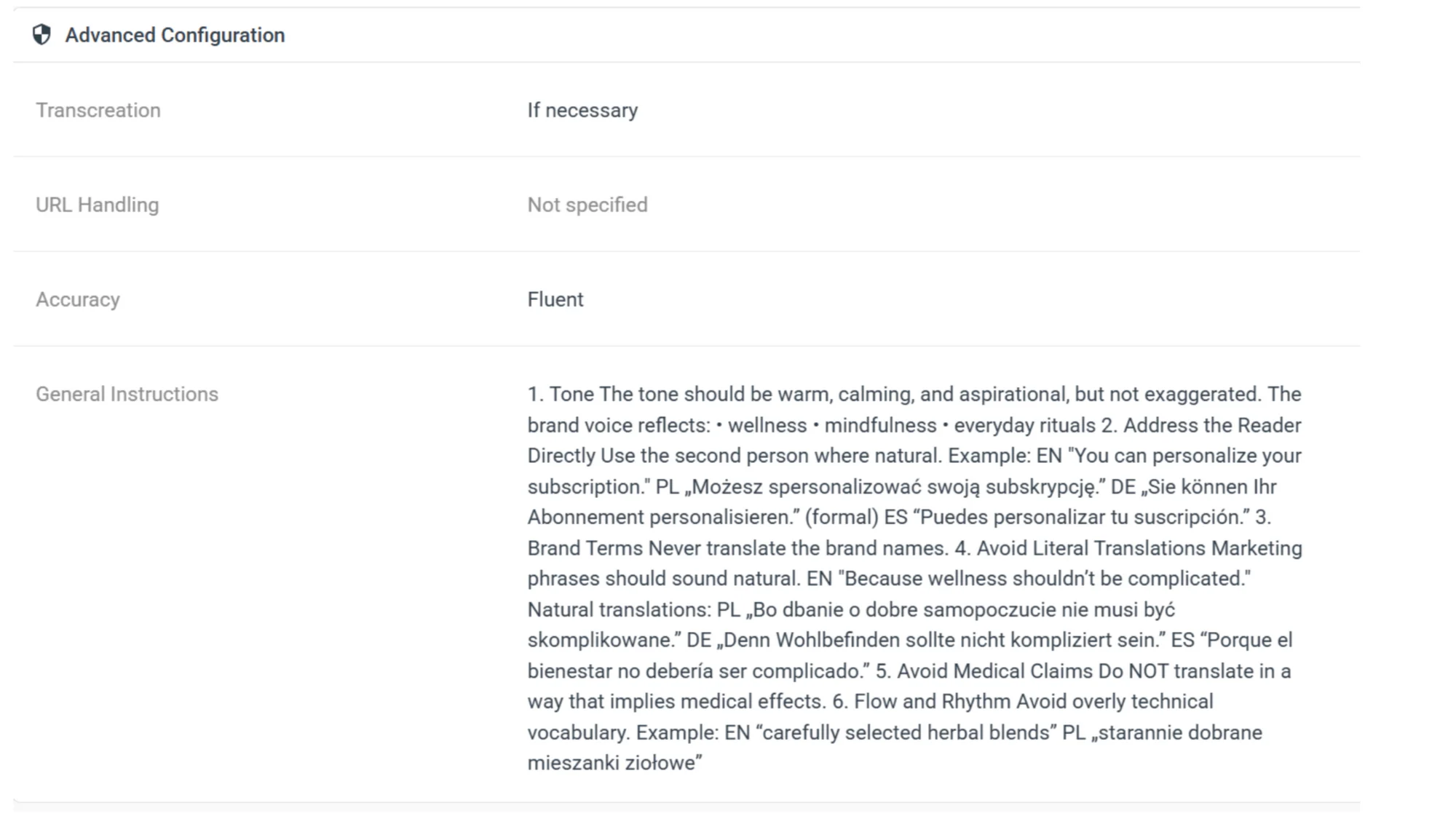
The style guides also contained examples of preferred translations in all three languages.
To score the output created by Localazy AI, I evaluated terminology adherence, style guide faithfulness, and translation fluency. No complicated calculations here – just 1 point for meeting the criteria fully, 0 for not meeting it at all, and deducted fractions of points for small deviations.
Note: Since the tool documentation states that Localazy AI works best when the source language is English, I decided not to push it to the edge of its capabilities and focus on this source language only
Let’s see which content type and language pair was handled by Localazy AI with the greatest care.
1️⃣ Part 1: Marketing copy 🔗
The first test candidate is a 415-word marketing copy from a fictional brand offering a Smart Tea subscription. 🍵 While I’m not entirely sure such services exist in real life, the text created for this experiment includes plenty of real-world challenges: a few creative phrases, a couple of brand names, and a decent dose of marketing language.
The style guide for this translation included instructions on tone (warm, calming, and aspirational), target audience definition (urban professionals interested in a mindful lifestyle), and other rules such as “avoid medical claims and literal translation” or “address the reader directly”. The only exception to the last rule was German, where the formal tone was required. Another key rule was gender neutrality.
Source text 🔗
At Solviva, we believe that everyday rituals deserve a little more attention.
In a world that often moves too fast, small moments of calm can make a big difference. A warm cup of tea in the morning. A quiet pause in the afternoon. A gentle evening infusion before sleep. These simple rituals help us reconnect with ourselves and restore balance in our daily lives.
That is why we created the Smart Tea Subscription.
Our subscription service delivers carefully curated herbal blends straight to your doorstep every month. Each monthly collection is designed by our team of tea experts, who draw inspiration from traditional wellness rituals around the world.
One month you might discover calming herbs inspired by Mediterranean evening traditions. Another month might bring energizing blends influenced by ancient Asian tea culture. Every collection is an invitation to explore new flavors, aromas, and moments of mindfulness.
But Solviva goes beyond simply delivering tea.
Through our mobile app, you can personalize your Smart Tea Subscription to match your lifestyle. The app allows you to share your preferences, daily routines, and lifestyle goals, such as better focus, more relaxation, or improved evening wind-down rituals.
Based on your input, the app recommends herbal blends that fit naturally into your day. Need a gentle evening infusion to help you slow down after a busy day? Looking for an energizing blend to start your morning with clarity? Solviva helps you build small wellness rituals that feel effortless.
Every tea we offer is crafted with care and respect for nature.
All Solviva teas are made from organic ingredients sourced from trusted growers around the world. We work closely with small farms that share our commitment to sustainability, biodiversity, and ethical sourcing.
This approach allows us to ensure that every herbal blend meets the highest standards of quality while supporting farming communities and protecting the environment.
But what truly makes Solviva special is the experience.
Opening your monthly collection should feel like receiving a thoughtful gift. Each delivery includes beautifully packaged herbal blends, tasting notes from our tea experts, and simple suggestions for creating your own wellness ritual at home.
Whether you enjoy your tea during a quiet morning moment or share it with friends in the evening, Solviva turns everyday tea drinking into something more meaningful.
Because wellness doesn’t have to be complicated.
Sometimes, it starts with something as simple as a cup of tea.
With Solviva’s Smart Tea Subscription, those moments of calm become part of your everyday life.
Results 🔗
Localazy AI consumed 2 credits per language pair. It took about one minute to translate each language, which is not so bad, considering the context that AI has to digest before spitting out the content.
Were the results worth waiting for? Absolutely.
Here’s a quick overview of the results per language:
🇵🇱 Polish
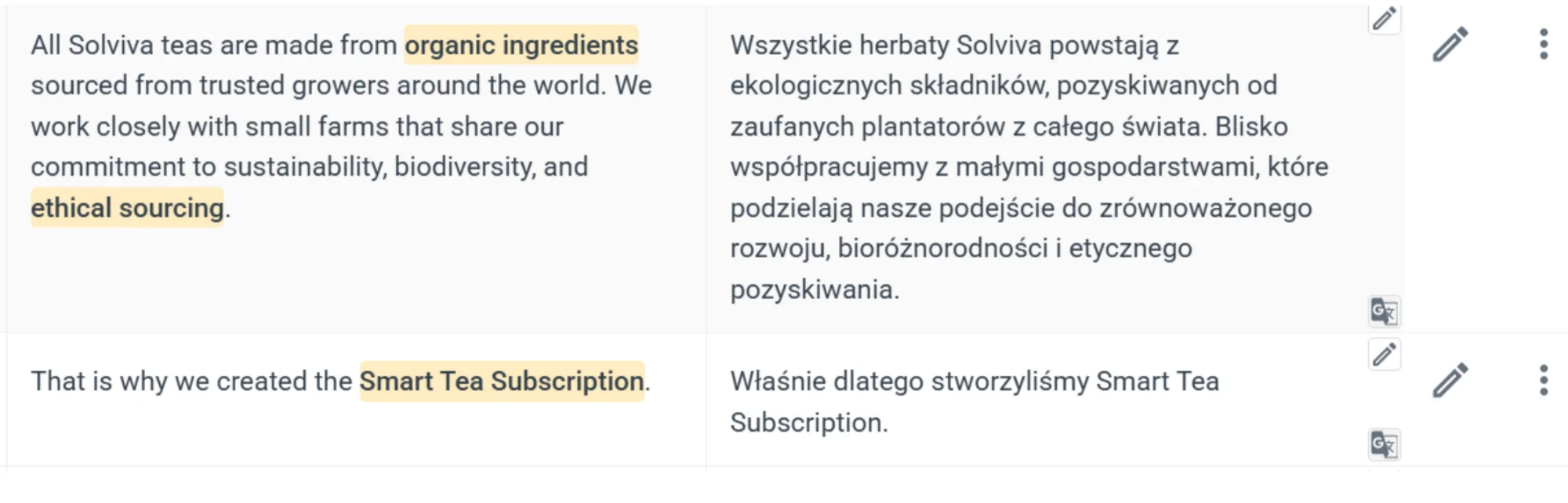
There’s not much to complain about. Localazy AI applied the style guide correctly, including the sample translations. Nearly all terms were rendered as per the glossary. One term was skipped, and another one had a switched word order (“wieczorny napar” instead of “napar wieczorny” for “evening infusion”). The translation was accurate and fluent, although some phrases could have been translated in a more creative way, instead of copying the source sentence structure. The results deserve one point for the style guide adherence, 0.8 for the overall translation quality, and only 0.8 for terminology due to the two missed instances.
🇩🇪 German
Similar story as above. Terminology was skipped in one case only. “Smart Tea Subscription” appeared in the text three times; once the model translated it as per the glossary, twice it was left in English. The model might have been confused by the use of capital letters in the source and probably took the phrase for a brand name, applying the style guide rule requesting to leave the brand names untranslated.
Other style guide rules were followed, too, especially regarding the formal register. The general instruction was to use casual and informal language, except for German. Localazy AI did respect this language override.
The tool considered the sample translations provided with the style guide. Whenever the source included sentences similar to the submitted examples, the model reacted accordingly and rendered the text based on the wording from the examples.
All in all, the translation was fluent and natural, which can justify the score of one full point. Style guide adherence gets one point too, while terminology compliance has to settle for a modest 0.8.

🇪🇸 Spanish
The terminology blunders on repeat. “Smart Tea Subscription” was treated as untranslatable in two cases; in the third one, it was translated as per the glossary. The style guide passed the test again; however, fluency suffered a bit. There was one missing article, one missing punctuation mark, and two phrases rendered for Spanish-LATAM, instead of Spanish Spain.
This only proves the point highlighted by Localazy on every single step: you can’t leave AI to its own devices, ignoring human judgment. Human expertise is always a key ingredient in any AI-powered adventure to ensure the text is contextually and linguistically correct.
This translation deserves one point for style guide adherence, 0.8 for terminology, and 0.8 for fluency.

2️⃣ Part 2: Technical manual 🔗
The second test round consisted of a 470-word drone manual. 🚁 An equally fictional brand, with equally representative text features such as instructions, industry terms, or units. The glossary included 10 terms in each language, and the style guide provided more context, such as the requirement to use a neutral and precise tone, apply imperative form for operational instructions, and keep product names untranslated.


To give the model a taste of the desired translation, I included sample translations for each language. Again, in terms of formality, German called for a formal register, and Spanish and Polish were allowed to stay neutral. Gender neutrality was an important requirement as well.
Source text 🔗
The LiftMate X200 is an autonomous warehouse drone designed to transport lightweight inventory items within modern distribution facilities. The system combines computer vision, onboard sensors, and cloud-based coordination software to ensure efficient and safe movement of goods between storage areas, picking stations, and packaging zones.
The LiftMate X200 is optimized for indoor warehouse environments and supports automated logistics workflows. By integrating with warehouse management systems, the drone can receive and execute delivery tasks automatically, reducing the need for manual transportation of small packages.

System setup
Before operating the drone, ensure that the charging dock is properly installed and connected to a stable power source. The charging dock should be placed on a flat, unobstructed surface within the designated charging zone.
Next, install the navigation beacons in all operational zones of the warehouse. These beacons allow the drone to determine its position with centimeter-level accuracy and maintain a stable flight path. Navigation beacons should be mounted at a height of 2–3 meters and positioned according to the installation map provided with the system.
Once the hardware components are installed, connect the system to the AeroSync Control Panel. The control panel allows operators to configure the drone, assign delivery routes, and monitor system performance in real time.

Starting a delivery task
To begin operation, open the AeroSync Control Panel and create a new delivery task. The operator must specify the pickup location, the destination zone, and the expected payload weight.
The system automatically verifies whether the payload exceeds the maximum payload capacity of 3 kg. If the payload is within acceptable limits, the drone initiates the autonomous flight sequence and proceeds to the pickup location.
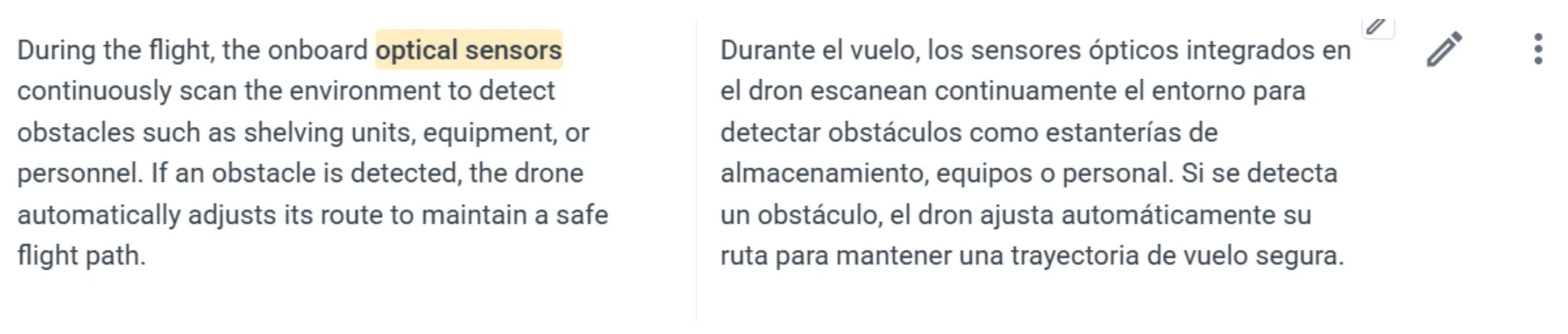
During the flight, the onboard optical sensors continuously scan the environment to detect obstacles such as shelving units, equipment, or personnel. If an obstacle is detected, the drone automatically adjusts its route to maintain a safe flight path.

Safety features
The LiftMate X200 includes several safety mechanisms designed to prevent accidents and operational disruptions. If the drone detects a sudden obstruction or loses connection with the network, it automatically switches to safe hover mode until communication with the control panel is restored.
In addition, the system continuously monitors battery health to ensure safe operation. When the battery level falls below the recommended threshold, the drone automatically returns to the charging dock.
Operators should ensure that warehouse personnel are aware of active drone zones and avoid placing temporary obstacles within designated flight corridors.

Maintenance
Routine maintenance should be performed every 200 flight hours to ensure optimal performance.
Maintenance procedures include:
Inspecting propellers for visible damage
Cleaning the optical sensors to remove dust or debris
Verifying the condition of the battery and checking battery health in the control panel
Ensuring the charging dock and navigation beacons remain securely installed
Failure to follow recommended maintenance procedures may reduce system efficiency and may void the product warranty.
Results 🔗
This time, Localazy AI consumed 2.3 credits per language, and the results were ready after roughly 1 minute.
What was the output quality? Surprisingly, no surprises again.
🇵🇱 Polish
No big deviations were detected here. The only problematic term was “control panel”, which was translated as per the glossary only when written in lower case. When both words were capitalized, the model treated the phrase as an untranslatable item and left it in English. Amusingly, when another term from the glossary appeared once in lower case and once in upper case (“Delivery Task”), the correct glossary term was applied every single time.
The style guide gained the respect it deserved, and the translation was accurate and fluent. These two areas earn one full point, while the glossary adherence receives 0.8 points.

🇩🇪 German
Glossary adherence was a bit tricky here. “Control panel” was translated correctly only when it appeared in the source in the lower case, but the upper case was rendered as an untranslatable term.
Apart from this little glitch, the style guide was applied correctly, and the language override requesting a formal tone was respected. There were no problems in the target text, which means one full point again for the style guide adherence and translation, and a little bit less for glossary adherence.

🇪🇸 Spanish
The technical text didn’t pose any challenges in this language either. All phrases were rendered as Spanish for Spain with no linguistic issues. The style guide was applied, and the glossary was missed only in the case of “control panel” written in the upper case. It seems the model followed a similar pattern of case confusion for all languages.
3️⃣ One more attempt: Mobile app strings 🔗
Since the tool passed the first test with flying colors, I decided to raise the bar. In the final experiment, I created several ambiguous mobile app strings with hidden pitfalls, such as variables representing numbers. 📵 These tricky creatures may change the grammatical case of surrounding words when you translate into highly inflected languages, so it was a trap worth constructing. My high-inflected target language this time was Polish, and the plan was to test how Localazy AI can handle not only the delicate placeholder-infused strings but also gender neutrality in more complicated sentences.
Source text 🔗
Welcome back!
All set and ready
Ready to go
Level %d reached
%d points earned
%d tasks completed today
Goal missed yesterday
%d-day streak achieved
Performance improved
New badge unlocked
Early access granted
Invitation received
One step closer to your goal
Goal completed
Great progress so far
Improvement detected
No activity today
Inactive for %d days
Rank: #%d this week
Daily goal achieved
Plan not completed
Preferences updated
Offline mode active
Session expired
Try again later
Something went wrong
Action required
Continue
Skip for now
Keep going
The source text was accompanied by a glossary of 10 terms and a style guide explaining how to avoid some of the pitfalls intended to push the tool to the extreme. Since the strings were for a fictional health-tracking app, the instructions called for a neutral, friendly tone. The style guide also included examples of how to translate gendered phrases (e.g., by using passive voice or preferring noun-based instead of verb-based phrases), and the rule to adjust grammar around variables representing numbers (e.g., “Points earned: %d”, instead of “%d points earned”).
Results 🔗
What happened in this case? Here’s a short overview:
📲 Mobile app in action
The cost of translating my 90 words of mobile app was only 0.6 credits and took less than a minute. This quick and cheap action resulted in surprisingly good content. Since my instructions regarding strings with variables were very precise, the tool rose to the challenge and provided grammatically correct phrases. For example, “%d task completed today” was rendered as “Zadania ukończone dziś: %d” to avoid problems with cases (the noun form changes depending on the preceding number).
The tool did well in terms of gender-neutrality, also in instances where no matching or similar examples were available in the style guide. Specific rules such as “Avoid gendered verb forms whenever possible” came to life in the translation of the string “Ready to start” that became a neutral “Gotowe do startu” rather than masculine-marked “Gotowy” or feminine “Gotowa”.

All the glossary terms were applied correctly, and my ambiguous fitness app, constructed to test the tool’s limits, turned out to be less of a workout than expected.
Once again, the test confirmed that Localazy AI follows not only the glossary, but also the style guide, which is not an easy quest. Many localization platforms that I had the pleasure to explore don’t include the style guide feature, or the style guide rules are followed partially. So, hats off to Localazy for solving this issue.
☝️ A word of warning
All this, of course, doesn’t mean that you can simply create a super-specific set of rules and an extensive glossary, hit “Use Localazy AI” and then publish the output in the blink of an eye. Every combination of language, content, and instructions may provide different results, so don’t forget to invite a professional linguist into your project to make sure your content works as required.
👁️ If this test peaked your curiosity, upload your own strings today to experiment with formality and different target languages. You can use the source text examples provided above by hitting the copy button on the upper right-hand side of the code boxes
🔬 Room for improvement 🔗
Two decades ago, Daft Punk had us all singing "Harder, Better, Faster, Stronger”. Not everything needs to be pushed to extremes, but sometimes it pays to “Work it harder, make it better”, even if the context changes. So, if I were to point out where Localazy AI could level up, I’d focus on the following:
1. Uploading glossaries as external files 🔗
When creating the projects, my biggest limitation was the lack of an option to add a style guide or glossary as a file. Both assets have to be submitted manually. For style, that’s manageable: the tool asks plenty of questions and guides you toward the right choices. Glossaries, however, are another story.
Entering terms one by one quickly becomes tiring, especially when you already have TBX or Excel glossaries sitting in your local folders. And many companies do. Adding terms manually, across multiple languages, isn’t exactly the most rewarding task. Even with my modest set of 10 terms across three languages, the setup took longer than the AI translation itself. If you’re saving time with AI translation, you probably don’t want to give it back by copy-pasting content that already exists elsewhere.
2. Including screenshots in AI translation 🔗
Localazy AI looks into style guides and glossaries when translating. But sometimes it helps to look further. For example, on screenshots. Those pieces of content serve as an invaluable source of context, especially for mobile apps and games. The tool can already recognize text from screenshots and match it with relevant source keys to show more content for translators. Maybe it could also go an extra mile and consider the screenshots as context for the AI-powered translation?
3. Exporting style guides and glossaries 🔗
Another priceless addition would be the export option for glossaries or style guides. In my experiments, I planned to create two similar projects using the same assets. But once I realized this would require manually recreating both the style guide and glossary, I quickly dropped the idea.
Exporting these context assets isn’t just useful for controlled experiments. It matters in real-life projects, too. You might be working on a new project for the same client and want to reuse an existing glossary or style guide. Without an export option, that means starting from scratch. A simple export feature could save a significant amount of time and avoid unnecessary frustrations.
👍 Delivered as promised 🔗
Grand promises are often difficult to keep. My experiments proved that Localazy AI is not selling fantasy by claiming it can deliver high-quality translations that understand your project’s context, terminology, and style requirements.
However, to see this promise fulfilled in your projects, you will need much more than a great tool. Detailed style instructions with sample translations indicating your desired style, decent glossaries, and human expertise remain invaluable factors for your success story. Will you give it a try?